Learning how to apologize to your partner is one of the most underrated relationship skills there is. Most of us were never actually taught to do it. We say a quick “I’m sorry,” hope the tension dissolves, and then feel blindsided when our partner is somehow more upset than before. Here’s the uncomfortable truth: a clumsy apology can do more damage than the original offense. A sincere one, delivered the right way, can actually make your relationship stronger than it was before the fight. This guide gives you the exact formula — words, timing, and mindset — so next time, you’ll know precisely how to apologize to your partner in a way that truly lands.
Why “I’m Sorry” Rarely Works on Its Own
Think of the last time you apologized and it fell flat. Chances are you said the words but missed the machinery underneath: researchers identify six elements that make an apology feel real — acknowledging what you did, taking responsibility without excuses, expressing remorse, validating their feelings, offering amends, and committing to change. Miss any one and the apology bounces off.
The good news? Apologies are a skill, not a personality trait — and the science behind them is striking. Dr. John Gottman’s research found that the success or failure of “repair attempts” (moments where one partner reaches out to de-escalate, including sincere apologies) is one of the strongest predictors of whether a relationship survives. The Gottman Institute’s work on repair attempts shows couples don’t fail because they fight — they fail because repair attempts go unnoticed or unanswered.
How to Apologize to Your Partner: The 7-Step Sincere Apology Formula
This is the complete sequence — every step and its order matters. Walk through all seven next time you need to make something right.
Step 1: Cool down before you open your mouth
Apologizing while your heart is still pounding is a recipe for a round-two fight. Gottman’s research on “flooding” shows that once your heart rate climbs during conflict, your brain’s ability to listen and empathize collapses. You literally cannot apologize well in a flooded state.
Take a genuine break of at least 20 minutes — walk, shower, breathe — then return within the same day, ideally within 24 hours. The sweet spot is calm but prompt: not a panicked mid-argument “sorry,” and not a three-day silence.
Step 2: Name exactly what you did
Vague apologies feel empty because they are empty. “I’m sorry for everything” tells your partner nothing — it sounds like you don’t know what you did wrong, or worse, that you don’t care enough to figure it out. Be forensic:
- Vague: “I’m sorry about last night.”
- Specific: “I’m sorry I raised my voice at you in front of your sister last night. That was disrespectful, and I put you in an awful position.”
One of the biggest upgrades in how to apologize to your partner is swapping vague for specific. Specificity does two powerful things. First, it proves you were actually paying attention — you understand what hurt them, not just that they’re upset. Second, it prevents the classic trap where you apologize for the wrong thing and your partner thinks, “They don’t even get it.” If you’re unsure which part hurt most, ask: “What was the worst part of that for you?” Then listen.
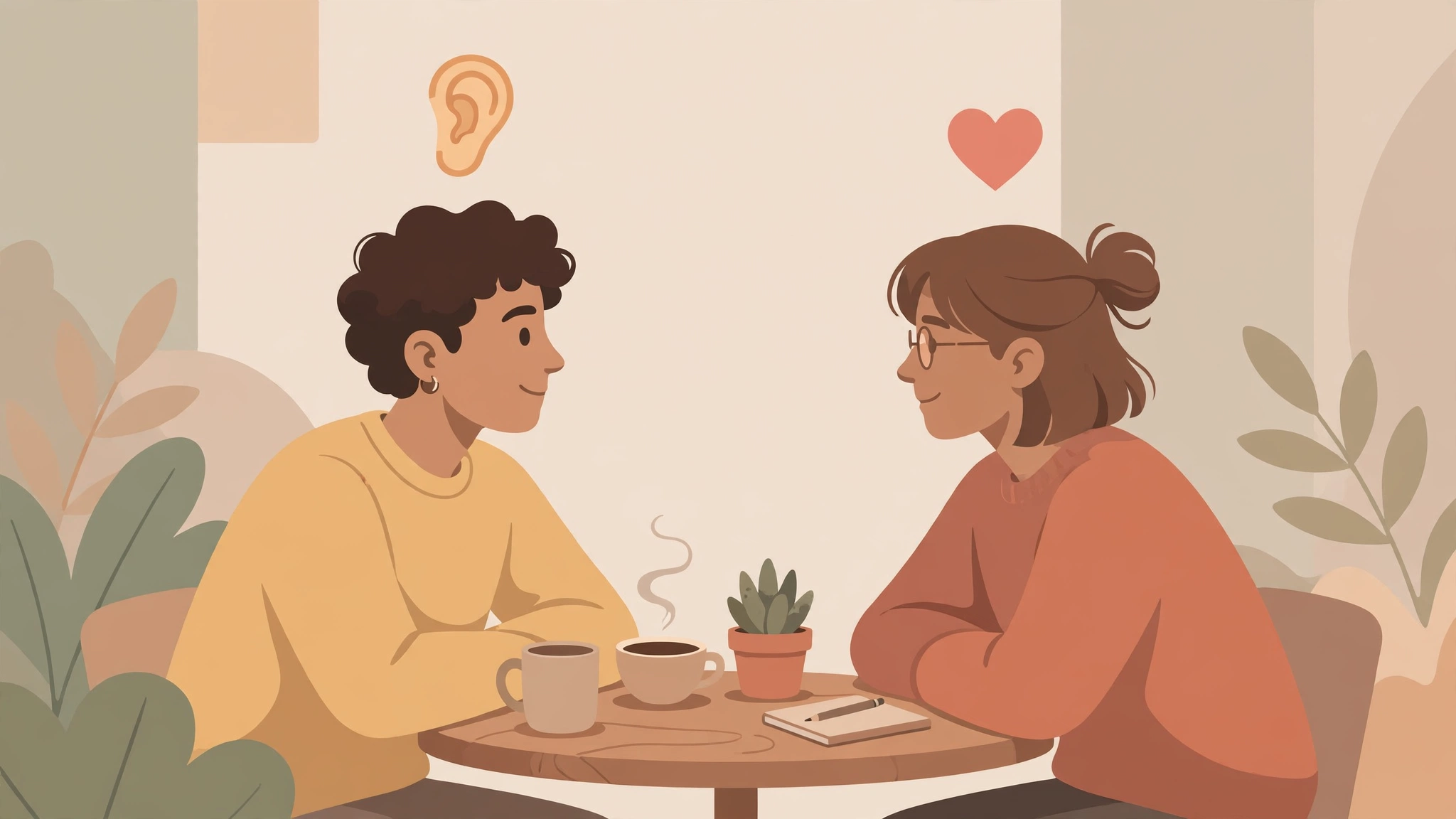
Step 3: Drop the word “but”
This is the single most important rule of how to apologize to your partner. Everything before the word but gets erased by everything after it. “I’m sorry I yelled, but you never listen” is not an apology — it’s a complaint wearing an apology costume. The moment you add a justification, your partner stops hearing remorse and starts hearing blame.
One nuance: there is a difference between explaining and excusing. Context like “I snapped because I was exhausted” can help — but only after the apology has fully landed, and only if it reads as context, not a defense. If you have a genuine concern about their behavior too, save it for a separate, calmer conversation.
Step 4: Speak to the impact, not just the action
Don’t just name what you did — name what it felt like for them. “I can see why that made you feel like you didn’t matter to me right then” does more work than ten “I’m sorry”s, because it proves you pictured their side.
Try reflecting their words back: “So when I forgot the dinner with your parents, you felt embarrassed and like I don’t take your family seriously.” You don’t have to agree with every detail — validation is simply acknowledging their feeling is real and understandable.
Step 5: Take responsibility — out loud, with no qualifiers
Say the words “I was wrong.” Full stop. No “I’m sorry you feel that way” (which blames them for feeling). No “I didn’t mean to” as the headline (intent matters less than impact). Research consistently finds that acknowledgment of responsibility is the element people rate most important — a finding echoed in Psychology Today’s guide to apologies that actually work. Your partner needs to hear that you own it.
Step 6: Offer to make it right — and ask what they need
A sincere apology includes repair. But don’t guess what repair looks like — ask. Psychologists Gary Chapman and Jennifer Thomas found that people have different “apology languages”: some need to hear remorse, others need changed behavior, others need restitution. What heals you might not heal your partner.
So ask directly: “What would help make this right for you?” Then honor the answer — a concrete action, time and space, or simply hearing you’ll handle it differently. Asking the question is itself part of the apology: it says your healing matters more than my comfort.
Step 7: Say what will change — and then change it
An apology followed by the same behavior next week isn’t a repair; it’s a subscription. End with one specific, believable change — “Next time I’m frustrated, I’ll say I need ten minutes instead of raising my voice” — then actually do it, visibly, for weeks. Follow-through is what converts an apology from words into trust. If you keep apologizing for the same thing on a loop, the pattern needs a plan, not another “sorry.”
What a Sincere Apology Sounds Like: Word-for-Word Scripts
Theory is nice, but when you’re figuring out how to apologize to your partner in the heat of the moment, you need sentences. Adapt these to your voice — scripts are starting points, not performances.
After snapping or yelling
“I’ve been thinking about earlier, and I owe you an apology. I’m sorry I snapped at you when you were telling me about your day. That was unfair — you deserved my attention, not my bad mood. I can see why it felt like I don’t care about what’s going on with you. I’m going to work on pausing when I’m frustrated instead of taking it out on you. What can I do to make tonight better?”
After lying or hiding something
“I need to be honest, and I’m sorry it’s taken me this long. I lied when I said [the specific thing]. That was wrong — you deserve honesty from me, always. I understand if this shakes your trust; I’d feel the same. I’ll answer any questions you have, honestly. Going forward, I’m committing to telling you the truth even when it’s uncomfortable. What do you need from me right now?”

After emotional neglect or stonewalling
“I’m sorry I’ve been distant and shut down this past week. You’ve been trying to reach me and I’ve been putting up a wall, and I know that’s lonely. You deserve a partner who shows up. Can we talk about what’s been going on — and set aside time this weekend that’s just us?”
When you disagree about what happened
What if you don’t fully think you were wrong? You can still apologize for the impact while holding your read of the facts. Two separate things: “I still see that night differently, and we can come back to that when we’re both calm. But the way I spoke to you hurt you, and I’m sorry for that part — no matter who turns out to be right about the rest.” You’re not confessing to a crime you didn’t commit. You’re acknowledging that your partner is in pain and you had a hand in it, which is true in almost every fight.
The Apology Killers: What to Never Say
Part of learning how to apologize to your partner is knowing what to never say. Here’s a translation table — the killer phrase, why it fails, and what to say instead:
| Apology killer | Why it fails | Say this instead |
|---|---|---|
| “I’m sorry you feel that way” | Blames them for feeling; takes zero responsibility | “I’m sorry I made you feel that way” |
| “I’m sorry, but you also…” | Erases the apology; turns it into a counterattack | “I’m sorry for my part. Can we talk about the rest separately?” |
| “I already said I’m sorry!” | Demands forgiveness on your schedule | “I know I’ve apologized — I understand it takes time” |
| “My bad” / “Sorry about that” | Too casual; signals the hurt was trivial | Full sentences: “I’m sorry I [specific thing]. It was wrong.” |
| “It wasn’t a big deal” | Minimizes their pain; decides for them how to feel | “I can see it was a big deal to you, and I take that seriously” |
| “I didn’t mean to, so…” (as the headline) | Intent becomes an excuse; impact gets ignored | “I didn’t intend it, but I see the impact — and I’m sorry for that” |
| Crying to end the conversation | Shifts focus to comforting you; they never get heard | Stay present: “I want to hear all of this, even though it’s hard” |
When Words Aren’t Enough: The Written Apology
Sometimes the best answer to how to apologize to your partner isn’t face-to-face. If you freeze up, If you freeze up or get defensive in live conversation — or your partner needs space to process — a written apology can be more powerful than a spoken one. Writing forces specificity and gives your partner something to re-read.
Rules for an apology letter or long message that actually works:
- Write it after you’ve cooled down, not at 2 a.m. in a spiral.
- Follow the same 7 steps. Writing doesn’t excuse vagueness.
- Keep it about them, not your guilt. A letter that’s mostly “I feel terrible” asks your partner to comfort you. Flip the ratio.
- End with an invitation, not a demand: “Whenever you’re ready to talk, I’m here” beats “Please forgive me.”
One caveat: text apologies are fine for small frictions (“Sorry I was short this morning — rough start, love you”). For real hurts, a text alone feels like a shortcut. Use writing to prepare for the real conversation, not replace it.
When They Won’t Forgive You Yet
You followed every guide on how to apologize to your partner — and they’re still hurt. That’s normal: forgiveness runs on your partner’s clock, not yours. Here’s how to handle the waiting period without making things worse:
- Don’t re-apologize every hour. One sincere apology, fully delivered, is enough — repeated ones pressure your partner and sound like they’re about relieving your guilt.
- Give space without disappearing. Stay present, warm, and normal. Don’t sulk or punish them with coldness for not forgiving fast enough.
- Show the change, don’t announce it. Trust is rebuilt in the quiet weeks after, when you handle the same trigger differently. That’s the real apology.
- Accept that deep hurts take time. Betrayal, lies, and repeated patterns can take weeks or months to forgive. Patience is part of taking responsibility.
- Know when it’s a signal, not just slowness. If your partner weaponizes your guilt indefinitely, refuses all repair, or holds every past mistake over you permanently, that’s no longer about your apology — it’s a communication pattern worth addressing together, possibly with a counselor. A healthy apology opens a door; it can’t force someone to walk through it.
If the same fights keep cycling no matter how well you apologize, the issue may run deeper than any single incident. Patterns like constant defensiveness or attracting emotionally unavailable partners need different work than better apologies. And if trust itself is damaged, our guide on building trust in a relationship walks through that longer road step by step.
FAQs
What are the most important parts of a sincere apology?
Research points to six elements: acknowledging the specific behavior, taking full responsibility, expressing genuine remorse, validating your partner’s feelings, offering to make amends, and committing to change. Taking responsibility is consistently rated the most important — miss any element and the apology can feel hollow.
What should you never say when apologizing to your partner?
Never say “I’m sorry you feel that way,” “I’m sorry, but…,” or “it wasn’t a big deal.” Each dodges responsibility or pressures your partner to forgive on your schedule. Replace them with ownership: “I’m sorry I [did X]. It was wrong, and I understand why it hurt you.”
How do you apologize when you don’t think you were wrong?
Separate the facts from the impact. You can hold your view while owning your part in their pain: “I see that night differently, but the way I spoke to you hurt you, and I’m sorry for that.” It’s not a confession — it’s acknowledging someone you love is hurting.
How long should you wait to apologize after a fight?
Wait until you’re calm — at least 20 minutes, since a flooded nervous system can’t empathize — but don’t wait days. Aim for the same day, within 24 hours. Mid-argument apologies are damage control, not repair; waiting too long lets resentment harden.
What if my partner won’t accept my apology?
Give it time without re-apologizing on a loop — one sincere apology is enough. Stay warm and present, visibly live the change you promised, and accept that deep hurts can take weeks to forgive. If past mistakes are held over you permanently, that’s a pattern worth addressing together, possibly with professional help.
Should you apologize over text or in person?
For small frictions, a thoughtful text is fine. For real hurts, talk in person — a text alone feels like a shortcut. A letter or long message is a strong middle option if live conversations keep derailing. Never use text to avoid the discomfort of facing them.
Mastering how to apologize to your partner won’t eliminate conflict — no skill can. But every sincere apology is a deposit in your relationship’s trust account.
Want to understand your connection better? Try our free love calculator for a fun compatibility check, or chat with our AI relationship assistant for personalized guidance — both free at relationshiptips.net.