It starts with fireworks and ends with confusion. They text you constantly for three weeks, then disappear for four days. They say they care, but they dodge every real conversation about feelings. And you are left staring at your phone, asking the question that brought you here: why do I attract emotionally unavailable partners — again?
You are not broken, and you are not cursed in love. Understanding why do I attract emotionally unavailable partners is the first step toward changing the pattern, because this frustrating loop is not about luck. It is about psychology: your attachment style, your childhood blueprint for love, and the subtle signals you send (and ignore) in early dating. The good news? Patterns can be rewired. Let us unpack exactly what is happening and how to fix it.
Why Do I Attract Emotionally Unavailable Partners? The Honest Answer
The short answer to why do I attract emotionally unavailable partners is this: you are not exactly choosing them at random — your nervous system is choosing what feels familiar. Psychologists call this “repetition compulsion”: we unconsciously gravitate toward relationship dynamics that mirror our earliest experiences of love, even when those dynamics hurt us. If affection in your childhood was inconsistent, unpredictable, or conditional, then an inconsistent partner feels like home. A steady, available partner, by contrast, can feel strangely boring or even suspicious.
This does not mean you are doomed to repeat the loop. It means the pattern has roots, and roots can be dug up. Below are the seven hidden reasons this keeps happening — see how many feel uncomfortably familiar.
7 Hidden Reasons You Keep Attracting Emotionally Unavailable Partners
1. Your attachment style is doing the picking
Attachment theory explains more about your dating life than any compatibility quiz ever will. If you have an anxious attachment style, you crave closeness and reassurance — and emotionally unavailable partners (often avoidant) trigger that craving on overdrive. The push-pull dynamic creates an addictive cycle: their distance makes you pursue harder, and your pursuit makes them withdraw further. This anxious-avoidant trap is the number-one psychological explanation for why do I attract emotionally unavailable partners on repeat. The fix starts with naming your style, which we will do in the action plan below.
2. Familiarity feels like chemistry
Here is an uncomfortable truth: that instant, electric “spark” you feel with unavailable people is often just your nervous system recognizing an old pattern. When someone is inconsistent, your brain releases dopamine in unpredictable bursts — the same mechanism behind slot machines. Steady affection, meanwhile, does not spike your dopamine, so it registers as “no chemistry.” You are mistaking anxiety for attraction, and calm for boredom. Learning to tell the difference is a skill, not a talent.
3. You are addicted to the chase, not the person
Be radically honest for a moment: were you more excited during the thrilling early weeks, or during the calm middle? Many people who attract unavailable partners are hooked on the pursuit — the longing, the wondering, the sweet relief when they finally text back. Once an unavailable partner actually commits (rare) or you meet someone genuinely available, the excitement flatlines and you lose interest. The chase was the drug; the person was just the dealer.
4. You try to earn love instead of receiving it
If deep down you believe love must be earned through effort, sacrifice, or being “enough,” then an emotionally available partner who simply loves you feels wrong — there is nothing to earn. Unavailable partners give you a project: if you can just get them to open up, commit, or choose you, then you will finally feel worthy. This is not love; it is a self-worth test disguised as romance. And it is rigged, because their unavailability was never about your worth.
5. Your childhood wrote the blueprint
The root of why do I attract emotionally unavailable partners often sits in childhood. A parent who was loving but unpredictable, critical, absent, or emotionally shut down taught your young brain a lesson: love is inconsistent, and you must work hard to get scraps of it. As an adult, you do not consciously want that dynamic — but your subconscious seeks it because it is the only version of love it knows. Recognizing this is not about blaming your parents; it is about updating an outdated map.
6. You confuse emotional intensity with emotional intimacy
Big fights followed by passionate makeups. Deep 3 a.m. conversations followed by three days of silence. Drama feels like depth, but it is not. Real intimacy is quieter: it is someone who shows up consistently, remembers the small things, and stays present during boring Tuesdays. If your relationships run hot and cold, you may be chasing intensity while calling it connection — and intensity is the unavailable partner’s specialty.
7. You ignore the early red flags (and call it optimism)
They told you on date two that they are “not looking for anything serious” and you heard “yet.” They dodged every question about their past and you called it “mysterious.” The flags were there; you just painted them green. People who repeatedly attract unavailable partners tend to override their own intuition in the first month, then spend the next six months trying to change someone who was honest from the start. Trusting early signals is the cheapest therapy there is.
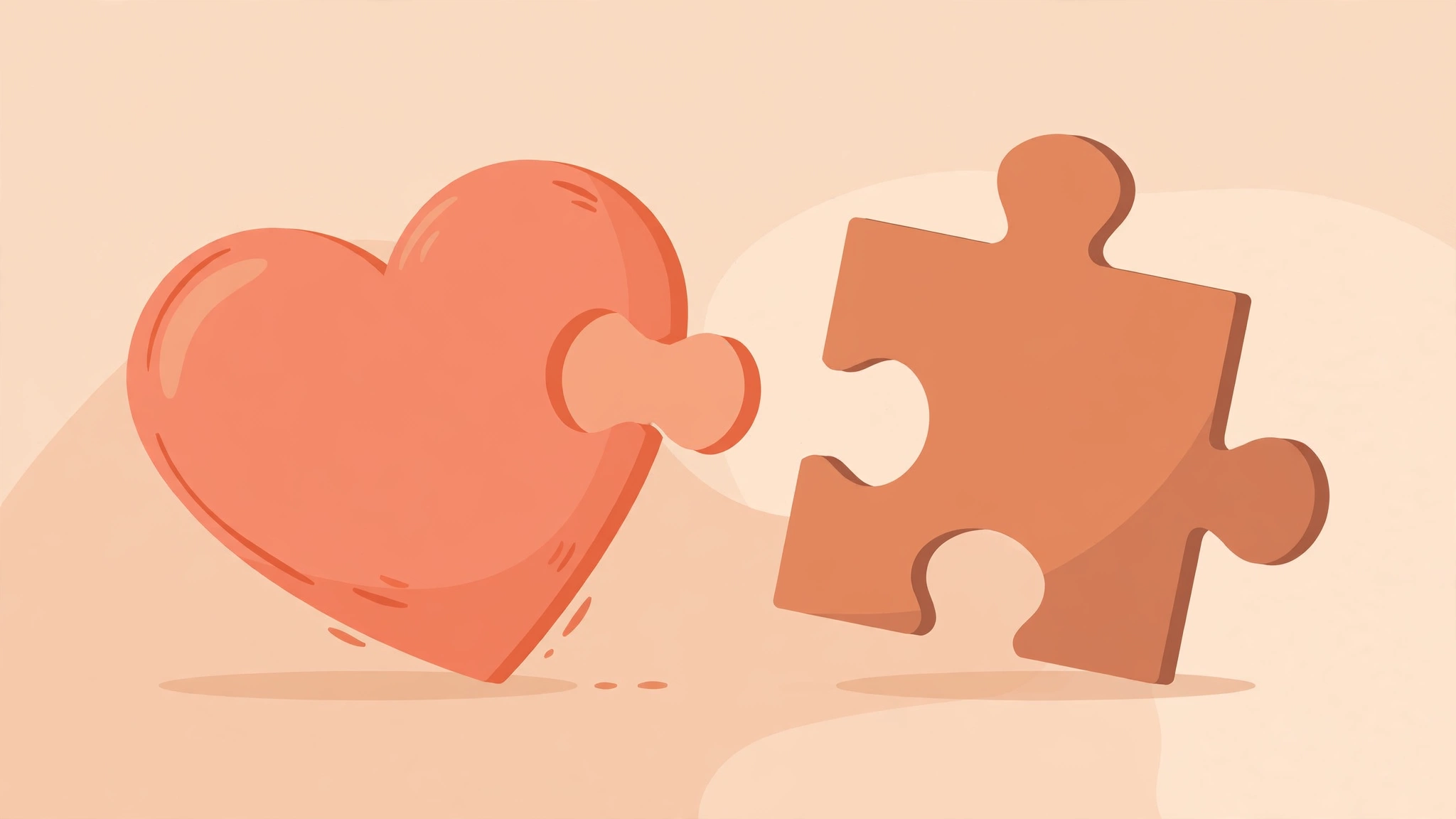
10 Signs You Are With an Emotionally Unavailable Partner Right Now
Not sure if this pattern is active in your current relationship? Once you see why do I attract emotionally unavailable partners, the next skill is spotting one early. Check how many of these sound familiar:
| The Sign | What It Looks Like in Real Life |
|---|---|
| Hot-and-cold communication | Twenty texts one day, silence for three — with no explanation. |
| Future-faking | Big talk about trips and plans, but nothing ever gets booked. |
| Deflects emotional conversations | Changes the subject, jokes it off, or says “you are overthinking.” |
| Keeps you at arm’s length | You have never met their friends, or they keep the relationship secret. |
| All take, no give | You plan, you initiate, you compromise — they just show up. |
| Excessive independence | “I just need a lot of space” becomes a permanent wall, not a boundary. |
| Blames past partners for everything | Every ex was “crazy” — they take zero responsibility. |
| Avoids labels and definitions | Months in, they still will not say you are dating. |
| Disappears during conflict | Stonewalling, ghosting for days, or shutting down mid-conversation. |
| You feel anxious more than secure | Your baseline emotion in the relationship is unease, not peace. |
If you checked more than four, you are likely living the pattern right now — which makes the action plan below urgent, not optional.
How to Stop Attracting Emotionally Unavailable Partners: 7 Proven Steps
Breaking the pattern behind why do I attract emotionally unavailable partners takes conscious effort, but it is absolutely doable. Here is your roadmap:
Step 1: Identify your attachment style
Take a reputable attachment-style quiz (many free ones exist online) and learn whether you lean anxious, avoidant, or secure. Knowledge alone changes behavior: once you catch yourself thinking “they are pulling away, I must chase,” you can pause and choose a secure response instead. People who understand their style stop outsourcing their calm to a partner’s texting habits.
Step 2: Rewrite what “your type” means
Write down the traits you have historically found irresistible — then circle the ones that are actually just unavailability in disguise (“mysterious,” “hard to get,” “intense”). Now write a new list: consistent, kind, communicative, emotionally present. Date against the new list for three months, even when it feels “boring.” Boring is your nervous system healing.
Step 3: Slow the pace deliberately
Unavailable partners thrive on fast, intense beginnings. Counter it: no exclusivity talks before six to eight weeks, no daily texting marathons in week one, no meeting parents in month one. Slowing down does two things — it filters out people who only wanted a fling, and it gives your rational brain time to evaluate before your hormones sign the contract.
Step 4: Set one boundary early and watch what happens
Early dating is data collection. State one small need — “I prefer plans made a day ahead, not last-minute” — and observe. An available partner adjusts; an unavailable one argues, guilt-trips, or vanishes. You just saved yourself six months. Boundaries are not walls; they are diagnostic tools.
Step 5: Heal the root, not just the symptom
Journaling, therapy, or even structured self-help work on your childhood patterns pays compound interest. Ask: whose love did I have to earn as a child? What did I learn about expressing needs? You do not need a perfect childhood to have a healthy relationship — you just need an updated understanding of it. For guidance on working through old wounds, our article on dating after divorce covers rebuilding trust in yourself first.
Step 6: Choose consistency over chemistry
This is the hardest step. When you meet someone kind and steady, your body may scream “no spark!” That is withdrawal from the drama drug, not a verdict on the person. Give consistent people a real chance — at least five dates — before deciding. Many people report that calm attraction grows into the deepest passion they have ever felt, precisely because it is built on safety. Instead of asking why do I attract emotionally unavailable partners, you will start asking why you ever settled for less.
Step 7: Get support for the rewiring
You do not have to do this alone. A therapist who understands attachment, a trusted friend who will call out your patterns, or even a structured program can accelerate the shift enormously. And when you are learning to read new partners accurately, our guide on how to tell if a guy likes you helps you decode genuine interest versus performative charm.
For a deeper dive into the science, HelpGuide’s overview of attachment in adult relationships and the relationship research covered by Psychology Today are excellent, reputable starting points.
FAQs
Why do I attract emotionally unavailable partners even when I try to choose better?
Because attraction is driven more by your subconscious than your intentions. If your nervous system learned that love is inconsistent, it will keep flagging inconsistent people as “chemistry.” Conscious dating — slowing down, using a checklist of green flags, and debriefing with a friend — overrides the autopilot until secure starts feeling normal.
Can an emotionally unavailable partner change?
Only if they recognize the pattern and actively work on it, usually with professional help. You cannot love someone into availability — trying just deepens the anxious-avoidant trap. Change is possible, but it must be their project, not yours. Your job is to decide what you will accept, not to rehabilitate a partner.
Is it my fault that I attract emotionally unavailable people?
No — fault is the wrong frame. Your patterns were shaped by experiences you did not choose, often in childhood. But as an adult, the pattern is your responsibility to change. That is actually empowering: what you did not cause, you can still cure with awareness, boundaries, and support.
How long does it take to break this dating pattern?
Most people notice real shifts within three to six months of conscious work — slower dating, firmer boundaries, and choosing consistency. Deep attachment rewiring can take a year or more, especially with therapy. The timeline shortens dramatically once you stop dating on autopilot and start dating with criteria.
Should I stay friends with emotionally unavailable exes?
Usually not, at least while you are rewiring. Keeping them close keeps the dopamine loop alive and signals to your brain that the pattern is still an option. A clean break — or at minimum, strong distance — gives your nervous system space to recalibrate toward healthier dynamics.
What does a healthy, available partner actually feel like at first?
Honestly? A little boring. Then, surprisingly peaceful. Then — as trust builds — deeply exciting in a grounded way. If you are used to chaos, calm feels wrong at first. Give it five dates minimum. Most people who push through the initial “where is the spark?” phase discover it was the best decision of their dating lives.
You will never again wonder why do I attract emotionally unavailable partners once you understand the pattern — because understanding it is what ends it. Start with one step this week: name your attachment style, set one early boundary on your next date, or simply notice when anxiety masquerades as chemistry. Small, conscious choices compound into a completely different love life. And if you want personalized insight into your own patterns, try the free love calculator and AI relationship assistant here on RelationshipTips — because the love you want begins with understanding the love you keep choosing.