Knowing the signs of emotional cheating can save your relationship — because emotional affairs rarely announce themselves. Instead, there is a slow, quiet shift: your partner grows distant, secretive about their phone, and less present with you. If your gut says something is off, this guide will help you name it, confirm it, and decide what to do next.
Emotional cheating is one of the most painful betrayals a relationship can face precisely because it is invisible. Studies on infidelity consistently find that many people rate emotional betrayal as equally — sometimes more — hurtful than a physical affair.
Learning to spot the signs of emotional cheating early is what turns a vague suspicion into an honest, productive conversation.
What Is Emotional Cheating?
Emotional cheating (also called an emotional affair) is a deep, intimate emotional connection with someone outside your relationship that crosses the boundaries of friendship — usually wrapped in secrecy. Nothing physical may happen, but the emotional bond takes on the intensity, exclusivity, and romantic charge that rightfully belong inside your marriage.
Psychologist Chivonna Childs of Cleveland Clinic explains: emotional cheating is a close emotional connection with someone other than your partner, built without fully disclosing it. That bond begins to interfere with your ability to connect with your partner — you start serving two masters, and the marriage starves.
Three ingredients appear together in nearly every case:
- Emotional intimacy beyond friendship — sharing fears, dreams, frustrations, and good news with the outside person first.
- Secrecy — hiding, deleting, or downplaying the conversations.
- Romantic or sexual undercurrent — a charge both people quietly know is there, even if nothing physical has happened.
When all three appear together, the signs of emotional cheating are unmistakable — and looking away only lets the affair deepen.
One ingredient alone is rarely proof. A private friendship is not an affair. It is the combination — intimacy plus secrecy plus emotional priority — that turns a friendship into cheating.
Emotional Cheating vs. Close Friendship: Where Is the Line?
Healthy marriages do not require partners to give up every close friendship. So how do you tell the difference between a friend and an affair?
A friend is someone your partner would feel comfortable introducing you to — and would not mind you reading their messages with. A person in an emotional affair is someone your partner protects, minimizes, and hides. The simplest gut check: friendship survives transparency; an emotional affair usually doesn’t.
Two practical tests can help you (or your partner) draw the line honestly:
- The Transparency Test: “Would I feel comfortable if my partner watched this conversation in full?” If the answer is no, a boundary has likely been crossed.
- The Role-Reversal Test: “How would I feel if my partner had this exact friendship with someone else?” If the thought stings, trust the sting.
Running these two tests is one of the simplest ways to recognize the signs of emotional cheating in your own relationship — or your partner’s.
The 7 Signs of Emotional Cheating
No single sign below proves anything on its own — people get busy, stressed, and withdrawn for all kinds of reasons. But when several of these signs of emotional cheating cluster together, especially alongside secrecy, it is time to pay attention and have an honest conversation.
1. Secrecy Around Their Phone and Conversations
They angle their phone away, take calls in another room, delete message threads, or suddenly add a password to a device they used to leave unlocked. This is the single most common early sign: hiding or deleting conversations is the behavioral hallmark that separates a friendship from an emotional affair.
2. Sharing Intimate Details They Withhold From You
Your partner tells this other person about their hopes, fears, frustrations — and your marriage problems — while you hear about them last or not at all. Confiding intimate details outside the marriage is a direct violation of trust. A friend points you back to your partner; an affair partner takes on your problems so you rely on them instead.
3. Constant Comparison — You Keep Coming Up Short
“Why can’t you be more like them?” When your partner frequently compares you unfavorably to this other person — their humor, their “understanding” — it reveals where their admiration is flowing. Unfair comparisons are rarely about your flaws; they signal the emotional disconnection taking root.
4. Defensiveness or Gaslighting When You Ask
Bring up the other person and watch the reaction. Partners in emotional affairs often turn defensive, irritable, or dismissive: “You’re imagining things,” “We’re just friends,” “You’re so insecure.” Minimizing or mocking your concerns — while protecting the outside relationship and resisting reasonable boundaries — is one of the clearest signs of emotional cheating.
5. Emotional Withdrawal at Home
They are physically present but emotionally gone: fewer deep conversations, less warmth, less interest in your day. Meanwhile they save their energy and excitement for someone else. This withdrawal is the quiet counterpart of secrecy — one hides the affair, the other feeds it — and together they are among the most reliable signs of emotional cheating.
6. Changes in Intimacy and Affection
You may notice less desire for closeness — or, confusingly, more physical closeness that feels emotionally empty. Cleveland Clinic’s Dr. Childs notes that emotional cheaters often “tune out” during intimate moments because their energy is directed at the outside person. Either sudden shift deserves an honest conversation.
7. Fantasizing About a Different Life
They fixate on the outside person all day, get a visible buzz from their messages, and daydream about a life with them. Romantic or sexual fantasies about this person — especially when they run toward them after conflict with you instead of working it out at home — mark the point where friendship has fully crossed into emotional affair territory.
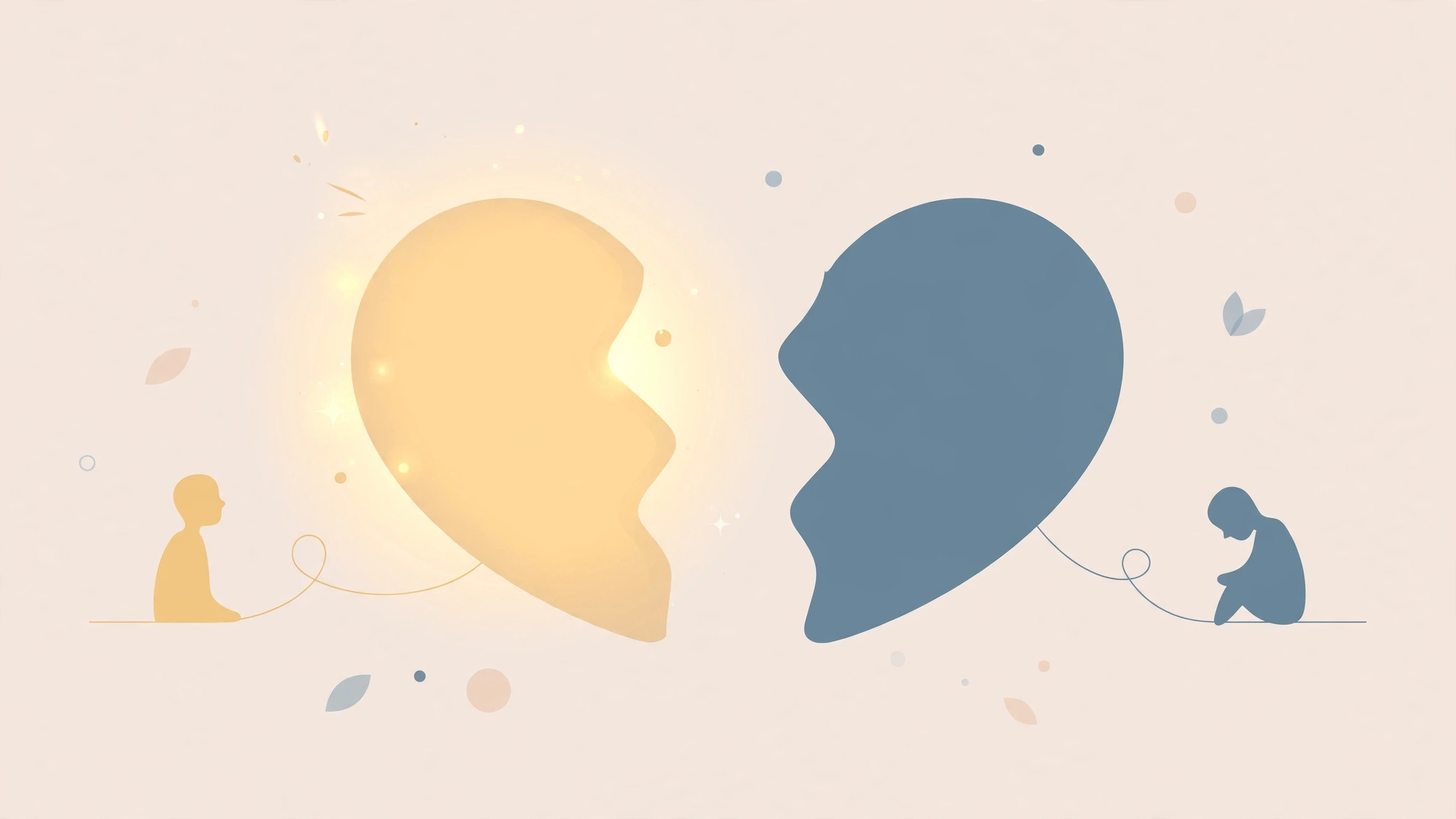
The 5 Stages: How an Emotional Affair Quietly Develops
Most emotional affairs don’t begin with a decision to cheat. They begin innocently — which is exactly why they are so dangerous. Here are the typical stages that turn a friendship into one of the classic signs of emotional cheating:
- Stage 1 — Innocent Friendship: A coworker, gym buddy, or old friend becomes someone you genuinely enjoy talking to. Nothing wrong here.
- Stage 2 — Intensified Bonding: Conversations get longer and more personal. They become the first person you text with good or bad news.
- Stage 3 — Secrecy Begins: You hide or minimize the friendship. You delete a thread “just so your partner won’t get the wrong idea.” The secrecy itself is the crossing of the line.
- Stage 4 — Emotional Reliance: They become your go-to for comfort. You complain to them about your partner, and they validate it instead of challenging it.
- Stage 5 — Fantasy and Crisis: Romantic fantasies begin. You compare your partner unfavorably, protect the outside relationship fiercely, and may start engineering time alone with them — the natural gateway toward physical infidelity.
Digital-Age Red Flags: Where Emotional Affairs Live in 2026
Competitor articles mention secrecy in passing, but few spell out how emotional cheating operates on today’s phones. These digital patterns are among the most-missed signs of emotional cheating — watch for them:
- Archived or hidden chats: disappearing-message modes, archived threads, or a second messaging app you’ve never heard of.
- “Close friends” and private stories: you are excluded from certain story circles that include one particular person.
- Late-night messaging windows: they stay up texting long after you go to bed, or can’t be reached during odd parts of the day.
- Guarded social media: new locks on profiles, blocked tags, or a follower whose name makes them flinch.
- The “re-lit” ex: an ex who reappeared as a “friend” online — our guides on how to stop thinking about your ex and whether you should text your ex cover the boundary lines that matter.
The 2-Minute Transparency Self-Test
Whether you are evaluating your partner’s behavior or honestly examining your own friendship, answer these seven questions yes or no:
- Would I be comfortable if my partner read every message in this friendship, start to finish?
- Do I share emotional details with this person that I hide from my partner?
- Have I compared my partner unfavorably to this person, even just in my head?
- Do I get a rush of excitement from their attention that I don’t feel at home?
- Would I feel a pang of loss if this friendship had to become completely open or end?
- Have I told my partner less about this person than there really is to tell?
- After a conflict with my partner, do I turn to this person first?
Scoring: 0 — likely a healthy friendship. 1–2 — a yellow flag worth discussing with your partner. 3–4 — you are on the boundary line; add transparency now. 5+ — this friendship has almost certainly crossed into emotional affair territory, and it needs to change immediately.
Be brutally honest with your answers — minimizing them defeats the purpose of screening for the signs of emotional cheating.
Why Emotional Cheating Hurts as Much as Physical Cheating
Many betrayed partners ask: “Nothing physical happened, so why does this hurt so much?” The pain comes from four specific injuries that need no physical act:
- Secrecy — you were deliberately kept in the dark about a major part of your partner’s inner life.
- Emotional replacement — the closeness that belonged to your marriage was handed to someone else.
- Divided loyalty — you stopped being the person they turned to first.
- Stolen privacy — private parts of your shared life moved outside the partnership without your knowledge or consent.
Therapists at the Gottman Institute‘s clinical network observe that couples struggle just as much to recover from emotional affairs as physical ones — partly because the betrayed partner is told they are “overreacting.” You are not. The lack of sex does not cancel the lie.
If any of this sounds familiar, trust what you’re seeing: these signs of emotional cheating are real, and naming them is the first step toward healing.
Why Emotional Cheating Happens
Understanding the cause is not excusing the behavior — it is finding the leak so you can fix the roof:
- Unmet emotional needs: feeling unseen, unappreciated, or lonely inside the marriage.
- Validation hunger: a new person offers admiration and excitement that routine no longer provides.
- Conflict avoidance: instead of fixing problems at home, the wandering partner outsources emotional support.
- Undefined boundaries: couples who never discussed what “too close” looks like slide into it by accident.
- Life transitions: new jobs, moves, a new baby — vulnerability spikes during change, and the workplace, with its daily proximity and private conversations, is where a large share of emotional affairs begin.
None of these causes excuses the betrayal — but understanding them helps you read the signs of emotional cheating accurately instead of spiraling into guesswork.
What to Do If You Spot the Signs of Emotional Cheating
First, what not to do in the first wave of discovery: don’t make an irreversible decision while adrenaline is high. Don’t spiral into phone forensics — it rarely brings relief. Don’t fight only about the label (“was it technically cheating?”); the real question is what happened and what you do about it. Acting on the signs of emotional cheating calmly — with a plan instead of panic — protects both your dignity and your options.
If Your Partner Is the One Emotionally Cheating
When you are ready to talk — soon, but not in the first hour — aim for clarity, not a courtroom:
- What was this relationship to you, and what did you hide?
- What did you share with them that you stopped sharing with me?
- Did you know at some point that it crossed a line?
- Are you willing to end the outside relationship and be fully transparent while trust rebuilds?
Their response matters as much as the answers: honest accountability is a foundation you can rebuild on; defensiveness, minimization, or blame are red flags.
If You’re the One Who Crossed the Line
Caught feelings you never planned? Recognizing the signs of emotional cheating in your own behavior takes courage — and ending it cleanly is your power. Here is a concrete script:
- Don’t ghost. A short, clear message: “I value our friendship, but I’ve realized our connection has crossed boundaries that aren’t fair to my partner. I need to step back and limit contact to professional matters only.” Clear is kind; dragging it out makes it worse.
- Delete the private channels. Remove archived chats and late-night messaging windows. If work requires contact, keep it public, brief, and professional.
- Tell your partner before they discover it. Voluntary disclosure rebuilds trust far faster than getting caught. Own the impact, not just the facts.
- Name what was missing. Individual therapy helps you understand what need drove you outward; couples counseling helps you rebuild it at home. Gottman Institute research shows couples who address the underlying disconnection have the strongest recoveries.
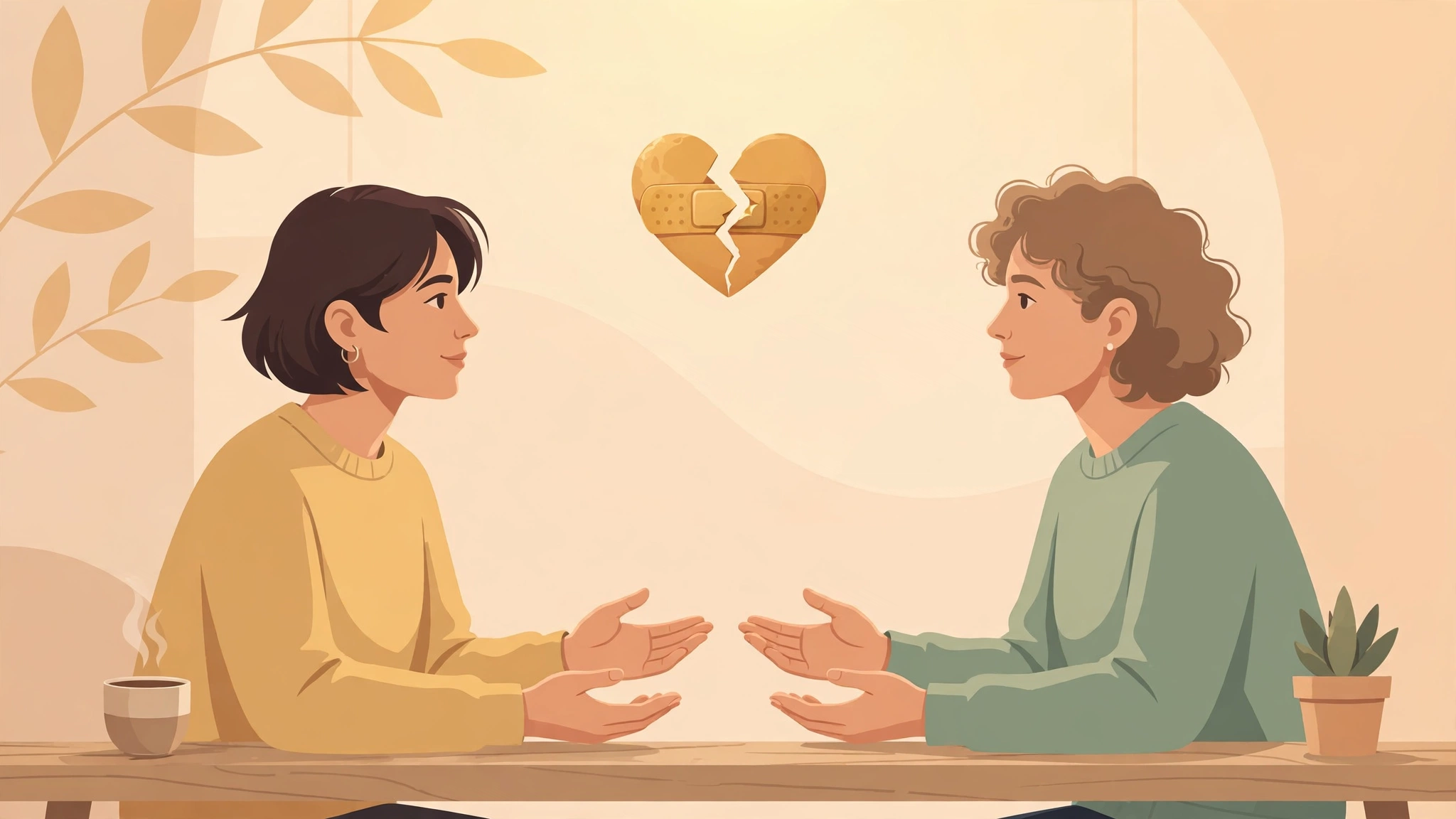
Rebuild Together: A Boundary Agreement That Actually Works
Recovery needs structure, not just promises. Write these down together and honor them:
- Full transparency during repair: open phones and shared schedules until trust is re-earned — a temporary measure, not a permanent punishment.
- The outside relationship changes: it ends, or it becomes entirely public and limited. “We’re just friends” is not a boundary.
- Daily reconnection ritual: even 15 minutes of intentional conversation, phones down, every evening.
- Conflict rules: agree to turn toward each other after a fight — no more running to an outside confidant for validation.
- Weekly check-ins: sit down two or three times a week and ask, “Is there anything you need from me?” — the grass is greener where you water it.
Trust returns slowly, through consistency over time — not one apology. If what you are asked feels forced, renegotiate rather than comply resentfully. A relationship that survives an emotional affair often ends up more honest than the one it replaced.
Couples who do this work often say that confronting the signs of emotional cheating honestly made their marriage stronger than it was before the crisis.
FAQs
What exactly counts as emotional cheating?
Emotional cheating is an emotionally intimate, secretive connection with someone outside your relationship that carries a romantic charge and takes priority over your partner. Sharing feelings with friends is healthy; hiding a charged relationship is the line. If you flinch at the transparency test — “would I be fine if my partner read these messages?” — the boundary is crossed.
Is emotional cheating as bad as physical cheating?
Many therapists and betrayed partners say yes — sometimes worse. Physical affairs end; emotional affairs rewire where your partner’s loyalty, excitement, and vulnerability live. The secrecy and emotional replacement damage trust just as deeply. Your pain is valid whether or not anything physical happened.
Can emotional cheating turn into a physical affair?
Yes, and it frequently does. Emotional affairs thrive on private time together — a key precondition for physical infidelity. Experts advise ending an emotional affair decisively rather than assuming it will stay non-physical.
How do I confront my partner about emotional cheating?
Wait until the initial shock passes, then aim for clarity, not accusation. State what you observed — the secrecy, the defensiveness, the withdrawal — and how it affects you. When the signs of emotional cheating are real, their willingness to be transparent and set boundaries matters more than any single answer.
Can a marriage survive emotional cheating?
Yes — many marriages emerge stronger, with more honest communication than before. Recovery takes honesty about what happened, real accountability, respected boundaries going forward, and patience while trust rebuilds. Couples counseling significantly improves the odds — especially when the signs of emotional cheating were spotted early, before the damage deepened.
Spotting the signs of emotional cheating early gives your relationship its best chance — not because the affair defines your marriage, but because honest, timely action can turn a crisis into the conversation your relationship needed. If you’re navigating trust, compatibility, or a fresh start, take a few minutes with our free love calculator or talk things through with our free AI relationship assistant at relationshiptips.net.
As you work through any of this, it helps to know what you are aiming for: our signs of a healthy relationship checklist spells out the green flags of a strong, healthy partnership.