One of the most common questions couples in a long-distance relationship ask is how often should long distance couples talk to stay close without driving each other crazy. Talk too little and the emotional gap widens; talk too much and the relationship starts to feel like a second job. The honest answer is that there is no single magic number — but there is a proven rhythm that works for most couples, and this guide will help you find yours.
Below, you will get a practical default schedule you can copy today, the factors that should shape your own number, warning signs you have drifted too far in either direction, and scripts for agreeing on a routine without turning it into a fight.
If you have been searching for how often should long distance couples talk to keep the spark alive, you are asking exactly the right question.
The Honest Answer to How Often Should Long Distance Couples Talk
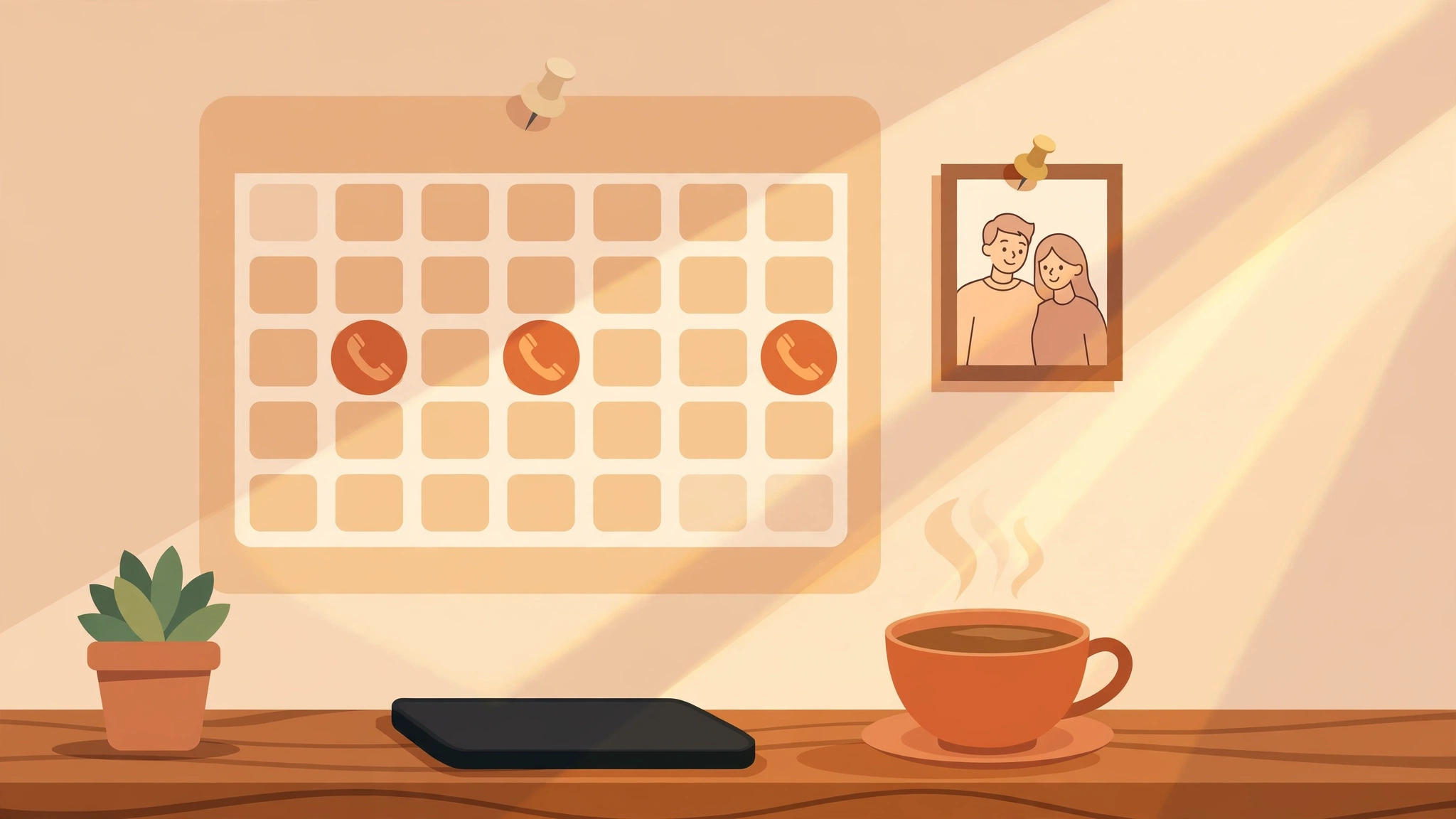
Let us start with the short version, because you probably want a number. For most couples, how often should long distance couples talk breaks down like this:
- Every day: some light contact — a good-morning text, a photo from your day, a two-line update, a voice note. Ten to twenty minutes of attention spread across the day.
- Two to four times a week: a real conversation by phone or video call, where you are both fully present, lasting 30 to 60 minutes.
- Once a week: something that feels like a date rather than a debrief — watch a film together, cook the same meal over video, play an online game.
That works out to roughly three to six hours of real calls per week, plus the background hum of daily texts. It is enough to feel deeply connected and sustainable enough to maintain during a bad week — and sustainability is the real test. The right frequency is the one you can keep when work explodes, when someone is sick, and when life gets boring, not just during the honeymoon phase of missing each other.
When friends ask me how often should long distance couples talk, this is the baseline I share before we tailor it to their lives.
Why There Is No Magic Number
Every advice column wants to hand you a number, but how often should long distance couples talk genuinely depends on your life, not on a rule. Consider the factors that legitimately change the answer:
- Time zones: A three-hour difference is a scheduling puzzle; a twelve-hour difference is a lifestyle. Couples across big time gaps often do better with fewer, more intentional calls plus generous asynchronous contact like voice notes and photos.
- Work and study schedules: Two medical residents cannot talk like two freelancers. Your rhythm has to fit inside real calendars, not fantasy ones.
- Attachment styles: An anxiously attached partner may need more frequent reassurance, while an avoidant partner may feel crowded by constant contact. Neither is wrong — but you need to name the difference instead of fighting about the symptom.
- Relationship stage: New couples usually want more contact because everything is discovery. Established couples often settle into a comfortable, lighter rhythm. Both are healthy.
- Personality: Some people recharge through conversation; others find a two-hour nightly call draining no matter how much they love the person on the other end.
The couples who thrive are not the ones who talk the most — they are the ones whose rhythm is predictable. A partner who calls every Tuesday and Sunday feels more reliable than one who calls five times one week and zero the next. Predictability is what the nervous system reads as safety.
Quality Beats Quantity Every Time
Here is the uncomfortable truth: eight hours of half-distracted calling while you both scroll your phones builds less intimacy than one focused forty-minute conversation. When researchers and therapists talk about what keeps long-distance couples together, they keep coming back to the quality of interaction, not the volume.
A high-quality call has a few ingredients: you are both paying attention, you share something real about your inner life (not just a logistics debrief), you laugh together, and you end feeling closer than when you started. If your calls routinely feel like status meetings — what did you do today, anything new, okay bye — the answer is not more calls. It is better ones.
Try this shift: replace one routine check-in call per week with a connection call. Ask one deeper question — what has been weighing on you lately, what are you looking forward to, what is something you have never told me — and actually listen to the answer. Couples who do this consistently report feeling closer even when they talk less overall.
So the next time you wonder how often should long distance couples talk, ask a better question: do your calls leave you feeling closer than when they started?

A Sample Weekly Rhythm You Can Copy
Steal this template and adjust it to your lives. It is built around the default rhythm above and designed for two people with normal busy schedules:
| Day | Contact | What it looks like |
|---|---|---|
| Monday | Light | Good-morning text, one photo from your day, a short evening voice note |
| Tuesday | Call | 45-minute video call after dinner — the week’s anchor conversation |
| Wednesday | Light | Texts through the day, share something funny you saw |
| Thursday | Call | 30-minute phone call on the commute or evening walk |
| Friday | Light | Low-key texts; excitement about the weekend date |
| Saturday | Date | Virtual date night — film, game, or cooking together on video |
| Sunday | Call | Longer unhurried call; plan the week ahead together |
Notice what this schedule does: it guarantees contact every single day, protects three real conversations, and still leaves breathing room. If your week is lighter, add a call. If it is brutal, drop Thursday’s call and keep the texts — the relationship survives because the pattern holds.
Return to this framework whenever the question of how often should long distance couples talk resurfaces in your relationship — seasons change, and rhythms should too.
5 Signs You Are Talking Too Much
More contact is not always more love. Sometimes constant communication is anxiety wearing a disguise. Watch for these signs that the volume has become the problem:
- You feel guilty doing things alone. If skipping one call to see friends triggers a spiral of guilt or a fight, the contact has become compulsive rather than connecting.
- Calls feel like obligations. When you catch yourself watching the clock or feeling relief when a call ends, you are talking past the point of enjoyment.
- You have nothing left to say — constantly. Occasional quiet evenings are fine. Perpetual so… what else means you are manufacturing contact instead of living lives worth sharing.
- One of you has quietly stopped initiating. If every call, text, and plan starts with the same person, the other may be drowning but afraid to say so.
- Your own life is shrinking. Friendships fading, hobbies abandoned, work suffering — all to protect call time. A relationship that costs you your life is not a healthy one, however loving it feels.
If two or more of these ring true, try a two-week experiment: cut call time by about a third and replace it with one genuinely fun shared activity per week. Most couples are surprised to feel closer, not further apart.
If this sounds familiar, the real question is not how often should long distance couples talk in theory, but what rhythm lets you both keep full, independent lives.
5 Signs You Are Not Talking Enough
On the other side, distance makes it dangerously easy to drift. These are the quiet warnings that you need more contact, not less:
- You feel like roommates with good Wi-Fi. Polite, functional, and oddly flat. The spark does not die loudly — it fades into logistics.
- Big things go unshared. You got the promotion, had the hard day, met the interesting person — and your partner hears about it third-hand or weeks later. That is emotional distance, not just physical.
- Small annoyances are piling up unspoken. Distance makes conflict feel risky, so irritations get shelved. Shelved irritations become resentment.
- You stop missing each other. Missing someone is not suffering — it is evidence of attachment. When the ache disappears entirely, pay attention.
- Fantasies about the single life are getting loud. Occasional what if thoughts are normal. A constant highlight reel of life without your partner is data.
The fix is rarely dramatic: add one real call per week and one daily ritual — a goodnight voice note, a shared photo album, a two-minute evening debrief. Small, consistent deposits rebuild the feeling of being chosen every day.
Couples who ask how often should long distance couples talk usually sense the drift before they can name it — trust that instinct and act early.
How Time Zones Change the Equation
A big time difference does not just reduce your overlapping hours — it changes the kind of contact that works. When one of you is starting the day as the other ends it, marathon nightly calls are punishing for whoever always takes the awkward hour.
The couples who handle this well do three things. First, they alternate the inconvenience rather than letting one person permanently sacrifice sleep. Second, they lean hard on asynchronous contact — voice notes, photos, short videos — so the relationship keeps breathing between live calls. A two-minute voice note listened to over morning coffee can carry surprising intimacy. Third, they protect one sacred overlap window per week where both are rested and present, even if it is only forty-five minutes.
If the gap is truly brutal, say eight-plus hours, consider shifting the question entirely: instead of asking how often you can talk live, ask how you can make each other feel thought of daily. A surprise delivery, a handwritten letter, a playlist — these land harder than a fifth exhausted midnight call.
Across big gaps, how often should long distance couples talk matters less than how thoughtfully you use the hours you actually share.
How to Agree on Your Number Without a Fight
Most couples never actually discuss frequency — they just collide when unspoken expectations differ. One partner assumes daily video calls; the other assumed texting was enough. Cue the you never call anymore argument that is really about feeling unprioritized.
When you and your partner disagree about how often should long distance couples talk, start with curiosity about each other’s needs rather than scorekeeping.
Have the conversation explicitly, and frame it as designing something together rather than negotiating demands:
- Start with needs, not numbers. I feel most connected when we… beats you need to call me every day every time.
- Propose a two-week trial. Let us try the Tuesday-Sunday call rhythm for two weeks and see how it feels. Trials are low-pressure; ultimatums are not.
- Build in a review. Agree to check in monthly: is our rhythm still working for both of us? Needs change with seasons of life.
- Separate reassurance from contact. Sometimes I need more calls really means I need to feel chosen. A heartfelt good-morning text ritual can satisfy the deeper need with far less scheduling strain.
- Respect a no. If your partner says nightly two-hour calls are too much, believe them. Sustainable beats maximal.
For more on keeping the emotional connection strong between calls, see our guide on how to keep the spark alive — many of the same principles apply at any distance. And if distance is starting to surface deeper cracks, our piece on signs your marriage is in trouble can help you tell a rough patch from a real problem.
Relationship researchers who study long-distance couples consistently find the same thing: it is the agreement about contact, not the amount, that predicts satisfaction. Couples who explicitly agree on their rhythm — whatever it is — report feeling closer than couples who talk more but never discussed it. For a deeper dive into the research-backed defaults, this long-distance relationship guide breaks down sample schedules by lifestyle.
FAQs
Is it normal to not talk every day in a long-distance relationship?
Yes — completely. While daily light contact works well for most couples, some healthy, committed couples talk deeply three or four times a week and feel entirely secure. What matters is that the pattern is mutual and predictable, not that it hits a daily quota. If both of you feel connected and neither is anxious about the gaps, your rhythm is working.
How many hours a week should long-distance couples talk on the phone?
A good benchmark is three to six hours of real calls per week, plus daily texts or voice notes. New couples or those in crisis may temporarily need more; established couples with demanding schedules often thrive on less. Treat the number as a starting point to adjust together, not a prescription — the quality of those hours matters far more than the count.
Should long-distance couples text every day?
Daily texting is the single highest-leverage habit in a long-distance relationship, because it creates a sense of shared daily life. It does not need to be constant — a good-morning message, one update from your day, and a goodnight note are plenty. The goal is making your partner feel included in your ordinary moments, which is exactly what distance threatens to erase.
How often should long distance couples talk when they are in very different time zones?
With a large time gap, aim for daily asynchronous contact (voice notes, photos, short videos) plus two to three well-rested live calls per week, alternating who takes the awkward hour. Protect one sacred overlap window weekly where neither of you is half-asleep. Thoughtful gestures — a surprise delivery, a handwritten letter — can matter more than extra exhausted calls.
Can talking too much hurt a long-distance relationship?
It can, when constant contact replaces real life rather than enriching it. Signs include feeling guilty about time apart, calls that feel obligatory, and shrinking friendships or hobbies. Paradoxically, couples who deliberately talk a little less — but with more presence — often feel closer. Contact should be something you look forward to, not a shift you clock into.
What should we do if we want very different amounts of contact?
Start by translating the numbers into needs: the partner wanting more usually needs reassurance of being prioritized, while the partner wanting less usually needs breathing room, not distance from you. Design a two-week trial rhythm together, add small reassurance rituals (like a consistent goodnight text), and review monthly. Most mismatches resolve once both people feel heard rather than managed.
Finding your rhythm is one of the kindest things you can do for a long-distance relationship — and it pairs beautifully with tools that keep the fun alive between calls. Try our free love calculator for a lighthearted moment together, or chat with our AI relationship assistant whenever you want thoughtful, judgment-free advice about your unique situation.