Most couples can survive a blown budget. What they struggle to survive is the discovery of financial infidelity signs — that stomach-dropping moment when you realize the numbers your partner has been showing you were never the real numbers. Maybe it’s a credit card you never knew existed, a loan your name is somehow on, or a pile of “nothing to worry about” purchases that turn out to be worth thousands. However it surfaces, financial cheating lands like any other betrayal: the money is a problem, but the lying is the wound.
The good news is that couples do recover from money secrets — often emerging more financially honest than they were before the secret existed. This guide walks you through what financial infidelity actually is, the eight warning signs to watch for, why partners hide money in the first place, and a concrete, step-by-step recovery plan that goes beyond vague “communicate more” advice.
What Is Financial Infidelity?
Financial infidelity is any deliberate concealment of money behavior from a partner in a committed relationship: hidden bank accounts, secret credit cards, undisclosed debt, lied-about income, hidden purchases, or gambling and spending habits kept off the shared ledger. The dollar amount doesn’t define it. A $50 lie and a $50,000 lie run on the same engine — someone decided their partner didn’t need to know.
What separates financial infidelity from an honest mistake is intent. Forgetting to mention a coffee run is absent-mindedness; quietly rerouting credit card statements to a separate inbox is a decision. It also differs from simple bad money habits: a partner who is openly terrible at budgeting is a frustration you can plan around, while a partner who hides the budget’s true state is a betrayal you can’t.
Note that financial infidelity is not the same as financial abuse. Hiding a purchase out of shame is infidelity; systematically restricting your access to money, wrecking your credit, or using money to control you is abuse — and abuse needs outside help, not just a better spreadsheet.
How Common Is Financial Infidelity?
More common than anyone wants to admit. Recent survey research from Bankrate found that roughly 4 in 10 adults in committed relationships admit to keeping some kind of financial secret from their partner — a hidden expense, an undisclosed debt, a card or account their partner never saw coming. The same research found that 43% of adults consider keeping money secrets at least as serious as physical cheating.
It skews younger: people in their twenties and thirties hide money from partners at meaningfully higher rates than older generations, which tracks with more couples keeping accounts separate before (or instead of) merging finances. Separate accounts are not the issue — many stable couples run separate accounts on purpose. The problem starts when “separate” quietly becomes “secret.”
8 Financial Infidelity Signs to Watch For
No one sits their partner down and confesses a hidden account out of nowhere. Money secrets almost always surface sideways — through behaviors that don’t quite add up. These financial infidelity signs don’t prove anything on their own; it’s the pattern, especially combined with evasiveness when you ask direct questions, that should prompt an honest conversation.
1. Statements and bills suddenly stop arriving
Mail or email statements that used to arrive regularly and suddenly don’t are one of the classic financial infidelity signs. Watch for paperless billing being switched on without discussion, statements rerouted to a different inbox or a P.O. box, or a partner who has become strangely protective of the mail. A common modern version: your online banking passwords “stop working” and your partner can’t quite explain why.
2. Defensiveness the moment money comes up
A partner who gets oddly vague, irritable, or outright defensive when you ask ordinary questions about spending — “Why are you interrogating me?” — is signaling something. Defensiveness about money is one of the most reliable financial infidelity signs because it reveals the emotional cost of maintaining the secret. The reaction is disproportionate to the question, and that disproportion is the tell.
3. Withdrawals and charges that don’t match the story
Cash withdrawals or card charges that don’t line up with what your partner said they bought are a major red flag. Rounding down purchases (“it was on sale”) is common; repeated transactions that can’t be explained are not. If you notice unexplained transfers, cash advances, or purchases that surface only when you check jointly held records, treat the pattern — not the individual charge — as the signal.
4. Your partner is suddenly “less informed” about finances
Pay attention when a partner who used to know the household finances starts acting confused or uninformed — or, conversely, when a previously hands-off partner develops a sudden, intense interest in managing all the money alone. Both directions can be financial infidelity signs: feigned ignorance buys cover, while sole control buys privacy.
5. New cards, loans, or accounts appear from nowhere
A new credit card, a loan you never discussed, or an account that materializes on your joint credit report is one of the clearest financial infidelity signs. Check periodically that your credit reports show only accounts you recognize — a report reveals accounts and inquiries a partner can’t talk their way around. It’s also worth watching for buy-now-pay-later plans and hidden digital wallets (Cash App, Venmo, crypto), which have become the secret accounts of the smartphone era.
6. They avoid tracking money together
A partner who consistently dodges joint budgeting sessions, changes the subject when a shared statement comes up, or gets uncomfortable the moment you suggest looking at the numbers together may be protecting a gap between what you see and what’s real. Healthy couples can disagree about money; they rarely refuse to look at it at all.
7. Lifestyle and money don’t line up
A standard of living that doesn’t match what you understand about your finances — in either direction — is a financial infidelity sign worth investigating. Suddenly being broke despite a good income can point to secret spending or gambling; a partner who seems strangely flush while household bills strain can point to a hidden income stream, secret gig, or worse, money that isn’t theirs to spend.
8. You’re asked to sign things you can’t read
A partner who presses you to sign loan documents, refinancing paperwork, or “routine” forms without giving you time to read them — or who gets annoyed when you ask questions first — is a serious warning sign. Never sign financial documents you haven’t read, no matter who asks. This is also one of the financial infidelity signs that crosses into legal danger, since your signature can bind you to debt you never agreed to.
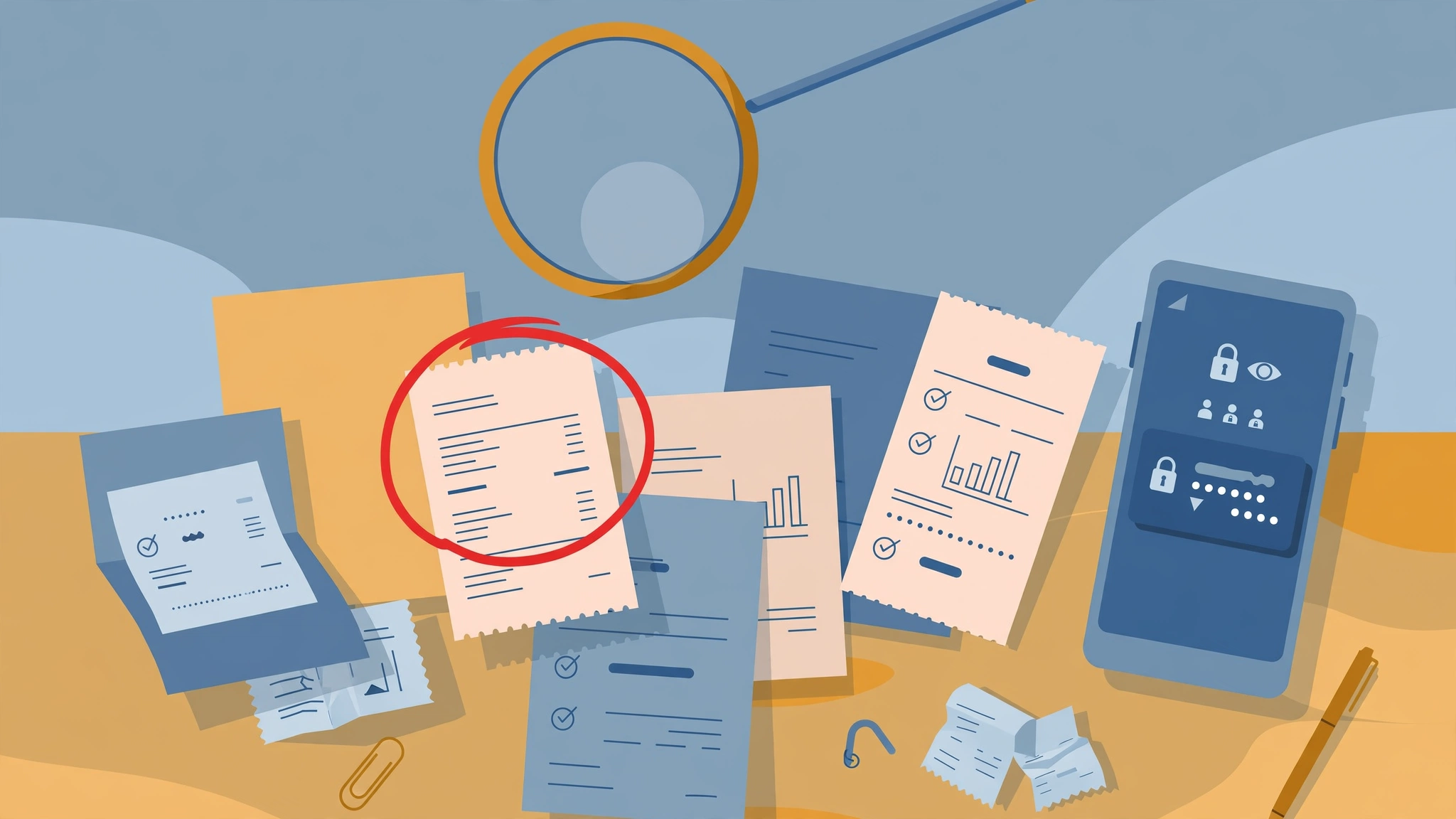
Why Partners Hide Money: 5 Root Causes
Understanding why financial infidelity signs appear makes recovery possible — because the fix depends on the motive. Peer-reviewed research on couple finances has identified several recurring drivers, and most of them aren’t cartoon villainy:
- Shame and fear of judgment. This is the most common driver. Someone overspends or accumulates debt, panics about the reaction, and decides silence is safer than honesty. The first cover-up is rarely premeditated — it’s damage control that becomes a habit.
- Conflict avoidance. It’s genuinely easier to say nothing than to sit through another fight about money, so nothing gets said, and the secret compounds in the background. Many hiders describe relief when the money topic simply doesn’t come up.
- Control and power. Sometimes one partner hoards financial information to stay in charge of the relationship’s decisions. Unlike shame-driven hiding, this pattern usually pairs with other controlling behaviors.
- Addiction. Gambling, shopping, and other compulsive behaviors generate spending that can’t be explained, so lying becomes the cover story. Here the money secret is a symptom of a bigger problem that needs its own treatment.
- Old single-life habits. A partner who always kept their own money can simply fail to update their habits once two incomes and a shared life enter the picture — financial infidelity by inertia rather than malice.
Knowing which driver you’re dealing with changes everything about how you respond. A shame-driven secret responds to compassion and structure; a control-driven pattern may need professional support or firm boundaries first.
Financial Infidelity vs. Financial Abuse
This distinction matters, because the response is completely different. In financial infidelity, the core issue is concealment — the hiding partner is trying to keep a secret, often driven by shame. In financial abuse, the core issue is control — restricting your access to money, refusing to share passwords, monitoring your purchases, or preventing you from working. As Psychology Today’s analysis of financial infidelity vs. abuse explains, infidelity is not necessarily an attempt to dominate the relationship, while abuse always is.
If money is being used to keep you dependent, afraid, or trapped — that is not a trust problem you can budget your way out of. Reach out to a domestic violence helpline or a financial counselor with abuse expertise. A secret purchase is infidelity; a secret that leaves you with no money, no credit, and no exit is something else entirely.
What to Do When You Notice the Signs
Spotting financial infidelity signs is step one; handling the confrontation well is step two. Going in hot turns a money problem into a war. Try this instead:
- Gather facts before the conversation. Pull your own credit report, note specific transactions, and write down what doesn’t add up. Evidence keeps the talk anchored in reality instead of spiraling into “you always” and “you never.”
- Pick a calm time, not a crisis moment. Don’t ambush your partner when a bill just bounced. Choose a neutral moment when you’re both rested and fed.
- Lead with “I” statements. Try: “I found a card I didn’t know about, and I feel scared and shut out. I need us to get everything on the table.” Curiosity and directness beat accusations — they make honesty feel possible instead of dangerous.
- Ask for full disclosure, not a debate. Say plainly: “I need to see every account, every debt, and every recurring charge.” Full visibility is the non-negotiable starting point for recovery.
- Don’t accept a partial confession. “It was just the one account” is a classic opening offer. Research on financial deception shows initial disclosures usually underestimate the scope. Ask gently but firmly whether there’s anything else — twice.
How to Recover: The Full Disclosure Audit
Generic recovery advice says “be transparent.” That sounds nice until you’re staring at each other wondering what transparent actually means. This is the first of three gaps most articles on financial infidelity signs miss: a concrete, document-by-document audit that leaves nowhere for secrets to hide. Do it together, in one sitting if possible:
- Credit reports for both partners. Pull all three bureaus. Highlight every open account, every inquiry, and every balance — yours and theirs.
- Bank and investment statements for the last 12 months, for every account either of you holds. Look for transfers between accounts you don’t recognize.
- Tax returns for the last 2-3 years. Compare reported income against what you believed your partner earned — undisclosed bonuses, gig work, and side businesses show up here.
- Pay stubs and benefit statements confirming current income, retirement contributions, and insurance premiums.
- Loan and credit card statements, including buy-now-pay-later plans (Afterpay, Klarna), store cards, and digital lending apps.
- Digital wallets and crypto. Check Cash App, Venmo, PayPal, and any crypto exchange apps on both phones. Hidden digital wallets are one of the fastest-growing places money secrets live.
- Insurance policies and beneficiary designations — make sure you know who is named on life insurance and retirement accounts.
- A shared password vault. Set up a password manager with emergency access for both partners. Ongoing secrecy is impossible when access is shared by design.
The audit isn’t punishment — it’s the foundation. Promises don’t rebuild trust; access does. Couples who complete a full disclosure audit often report feeling closer afterward, because the secret, not the money, was the real weight on the relationship. For structured guidance, many couples benefit from the kind of trust-rebuilding routines covered in marriage counseling exercises you can do at home.
Your First 30 Days After Discovery
The second gap competitors leave open is timing — what happens after the audit, and how long recovery actually takes. Use this timeline:
- Week 1 — Stabilize. Freeze new credit applications, agree on a temporary “no purchases over $50 without a text” rule, and give both partners space to feel their feelings without making permanent decisions.
- Week 2 — Build the system. Create one shared budget with a single set of numbers you both review. Schedule a weekly 20-minute “money date” — short, regular check-ins beat one annual finance summit.
- Weeks 3–4 — Work the underlying issue. If the root cause was shame, build judgment-free budget talks. If it was conflict avoidance, practice the gentle startup techniques relationship researchers like the Gottman Institute’s conflict research recommend. If it was addiction, find a specialist — the money secret is the symptom.
Set realistic expectations: trust typically takes 6–18 months to rebuild after a serious money secret, with milestones along the way (first clean credit report, first calm money date, first big purchase decided together). If secrets resurface after a first confession — repeated financial infidelity — that’s the signal the real cause was never fixed, and a couples therapist or financial therapist is worth every penny.

Preventing Financial Infidelity Before Marriage
The third gap most guides miss: this conversation shouldn’t start after the wedding. Financial deception can begin during dating and engagement — hidden debt and lied-about income surface in prenuptial discussions often enough that family lawyers flag it. Build a money-history conversation into your engagement:
- Swap credit scores and full reports — no surprises later.
- Disclose all debts and obligations, including family support you provide.
- Agree on a spending threshold (e.g., anything over $100 gets a heads-up).
- Decide what stays separate and what merges — and write it down.
- Ask about money upbringing: scarcity and abundance mindsets clash hardest in marriage.
Early couples who establish shared financial visibility make secrecy pointless later. The habits you build before marriage are the ones that protect you after it.
FAQs
What exactly counts as financial infidelity?
Any deliberate concealment of money behavior from a committed partner: hidden accounts or credit cards, undisclosed debt, lied-about income or bonuses, hidden purchases, secret gambling or spending, and concealed assets or crypto holdings. The defining feature is intent to deceive, not the dollar amount involved.
How common is financial infidelity?
Very common. Survey research finds roughly 4 in 10 adults in committed relationships admit to keeping some financial secret from their partner, and 43% of adults consider money secrets at least as damaging as physical cheating. It is more prevalent among younger couples, who are also more likely to keep finances separate.
Is financial infidelity grounds for divorce?
Not as a standalone legal ground in most jurisdictions, but it is one of the most commonly cited reasons couples split. Courts can factor financial deception into asset division, especially if someone hid assets to shield them from a settlement. Consult a family lawyer if the deception involves joint debts or hidden marital assets.
Can a relationship recover from financial infidelity?
Yes — many couples report becoming more financially honest after a full disclosure than they ever were before. Recovery requires complete transparency (a document-by-document audit), a shared budgeting system, regular money check-ins, and usually 6–18 months of consistent follow-through. Professional help from a couples or financial therapist significantly speeds the timeline for serious breaches.
How can I check if my partner is hiding money?
Pull your own credit report first — it reveals accounts and inquiries a partner can’t explain away. Then review joint bank and card statements for unfamiliar transfers, check digital wallets and buy-now-pay-later apps, and compare tax returns against the income you believed existed. Patterns of unexplained activity matter more than any single transaction.
Is financial infidelity the same as financial abuse?
No. Financial infidelity is concealment — hiding money behavior, usually driven by shame or conflict avoidance. Financial abuse is control — restricting your access to money, refusing to share passwords, monitoring your spending, or sabotaging your ability to work. Abuse requires outside intervention, not just better budgeting.
If you’ve recognized any of these financial infidelity signs in your own relationship, take it as a starting point — not a verdict. The couples who recover aren’t the ones who never had a money secret; they’re the ones who put everything on the table, built a shared system, and kept showing up for the money conversation week after week. Want a lighter way to reconnect first? Try the site’s free tools — the love calculator and the AI relationship assistant — at relationshiptips.net, and start rebuilding from a place of curiosity instead of suspicion.