Relationships are a part of everyday life. From friendships and family connections to romantic partnerships and professional relationships, the people around us can influence how people think, feel, and grow. Different bonds have different characteristics; understanding these provides means for people to interact in established ways.
There are a lot of relationships that fall into non-romantic territory; they can be work relationships, friendship relationships, or partnership relationships. All have their own unique boundaries and challenges.
A relationship is one connection between two or more people. Relationships can vary in the type of emotional connection (e.g., social, romantic, etc.) and the relationships one has with their peers at work, family members, etc. Relationships grow through verbal connection and the interrelation of trust and the exchange of experiences. I see that a relationship is strengthened through bond sharing.
Some relationships exist for a long time, while others simply pass through. The length of a relationship does not show how important it is. Even a short relationship can affect your life. Understanding the nature of relationships will help you understand the effects of what kind of relationships you expose yourself to.
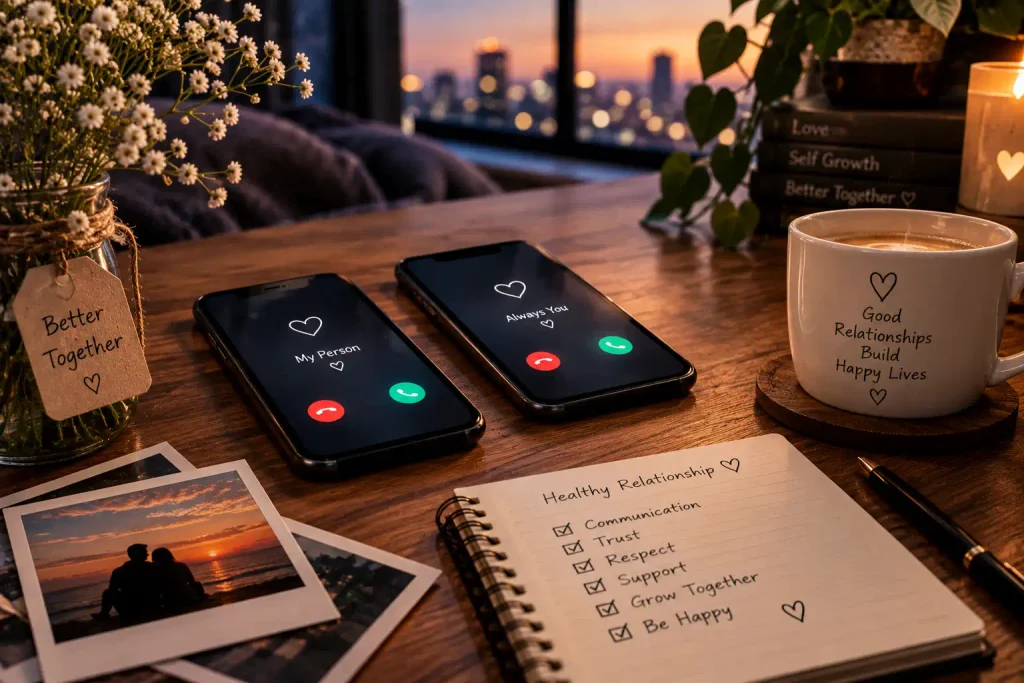
1. Romantic Relationships
Of all the relationships we discuss, romantic relationships are typically built on emotional closeness and something that draws us to a person physically. We desire to build a greater emotional bond with that person.
A strong and healthy romantic relationship can be built on all of the following:
- Trust
- Respect
- Honest Communication
- Offering Emotional Support
- Shared responsibility
- Healthy boundaries
- Affection and Appreciation
Romantic relationships evolve with the partners and the phases of life the partners experience. What starts off as attraction and exuberance declines and matures to the realm of trust, cooperation, and a common understanding of life goals.
Strong romantic ties don’t mean agreement on everything. Partners should be able to disagree but be civil. The goal should be cooperation and not competition.
You don’t need complete agreement with your partner to have a strong romantic connection. Instead, you must learn to accept that you don’t agree on everything, and you must learn to respect the other person’s perspective. You can only develop this understanding when you consider their point of view. True understanding comes when people are respected. When people are respected, you can keep your integrity. Still show respect even when disagreements arise. It is stronger to remain honest and respectful when people agree. Strong, romantic connections are only possible in the presence of honesty and a considerable amount of respect.
2. Friendships
Friendships are another kind of bond. I find that family relationships are different from friendships. Friendships usually start when people have things in common—interests, experiences, values, or situations they go through together.
A strong friendship can offer support, a sense of companionship, encouragement when times get tough, and that warm feeling of belonging.
I have seen friendships letting people celebrate achievements together, offer advice in times of need, or simply make daily life brighter.
Healthy friendships normally have respect. In friendships people should feel free to share thoughts without fearing judgment or rejection.
Friendships can exist at levels. I notice that people sometimes keep one or two close friends, while other people have a larger circle of friends, each friend varying in closeness.
3. Family Relationships
Your relationships with your parents, siblings, aunts, uncles, grandparents, and even your cousins and any others are all included in what we call family relationships.
Family relationships can help define a person’s emotions and self-awareness.
Families are your first line of support and provide much-needed safety and belonging. They can also provide you with direction.
Family relationships are rarely simple. Conflicts can easily emerge because people have ideas about right and wrong about how to behave, about what they expect about how they speak, and about what they care about.
Healthy relationships do not mean that every family member will agree on everything.
Instead, they believe in the simultaneous presence of individual and group differences. They understand that cooperation and respect for limitations will also help them peacefully unite.
4. Professional Relationships
Professional relationships encompass the bonds that professional/business people have with one another due to their shared professional/business interaction.
Professional relationships are built quite often on emotional proximity and closeness at work.
Respect and professionalism also mean that you:
- Are reliable and trustworthy
- Set and maintain boundaries and limits
- Are responsible
- Engage in good communication
- Work well with others and cooperate
These relationships also enhance the work environment and bring a sense of ease and relaxation to the workplace. In addition, it is crucial to maintain boundaries and understand that workplace relationships have their own rules, unlike those of friendships and love relationships.
5. Casual Relationships
Casual relationships are relationships that do not hold feelings. These relationships are as close as relationships that can occur with people who are a part of your daily routine.
You might have a link with your neighbor, a person you sit next to in class, a friend who goes to the gym with you, or someone you get to know because of a hobby. I notice that these kinds of connections often feel small or simple. Connections still matter. Even if connections do not feel like friendships, connections can still help you in ways. I think there are ways to build connections, and not all of them must be based on friendship.
We characterize friendships as relationships involving closeness, trust, and reciprocity of care. Relationships come in lots of varieties and don’t need to include the intensity of friendship.
6. Long-Distance Relationships
Romantic relationships and friendship relationships are the same; long-distance relationships exist. Long-distance relationships create barriers to interacting, but advancements in technology mean we can now message and video chat more regularly.
Trust and the closure of distance come from scheduled talking and sharing experiences. You should focus on not talking every single day but talking consistently.
7. Acquaintance Relationships
Acquaintances are made when you rarely talk with someone. They become distant to you.
You lose people you see all the time, like coworkers, and there are people you see at community institutions.
Acquaintance relationships involve the exchange of some personal information, but you don’t rely on them for support in the emotional sense.
There are a lot of different ways to intensify an acquaintance, like familiarity and closeness; they can slowly develop trust and become friends.
8. Supportive Relationships
Younger relationships and older relationships, like mentorships, are about giving and sharing support. Supportive relationships and friendships are pretty much the same thing.
- Support doesn’t have to be hard and constant. Sometimes support is more about just being there.
- A relationship should always be supportive of the other person but also of yourself.
- One person should not always give while the other only takes.
9. Mentor Relationships
A mentor relationship involves a more experienced person guiding a less experienced person, either by advising, providing support and/or encouragement, and developing the less experienced person.
Mentor relationships can be found at all levels of education and at the workplace, in the business world, and in the world of personal growth.
A mentor is judged by the degree to which the less experienced person is capable of making decisions for themselves rather than making the decisions for the less experienced person.
This type of relationship helps stimulate growth and provides long-term guidance.
10. Online Relationships
The development of means to establish and maintain relationships has grown in response to the needs of the population. These relationships can be developed through gaming, hobbies, work forums, and other digital technologies.
Online relationships, like other relationships, require respect and an understanding of the limits of one’s personal privacy and the other’s personal privacy, but they also require a measure of good faith.
Learning about various friendships can give you different avenues for having different kinds of friendships. What you want from your friends is not what you want from your colleagues, your family, or your S/O.
Learning the intricacies of a relationship will allow you to create healthy boundaries to help you navigate and explain your side of the relationship that is corrupted and unhealthy.
Positive relationships have common characteristics.
There are many forms relationships can take. Though forms will vary, certain things describe healthy relationships.
Respect and Consideration
Value every individual’s opinion and respect everyone you encounter. There is no excuse to show who you are when you’re unpleasant and mean because someone has a different personality from you.
Trust
Acting consistently and honestly builds trust, which enables the ear to hear more to be said and heard.
Healthy Communication
Healthy communication allows an individual to express feelings and to ask questions and to provide their own answers. Trust is built through healthy communication and listening.
Building Healthy Relationships
In creating healthy relationship boundaries, an individual feels safe and answers the questions, “What is okay?” “What is not okay?” and “What are the clear-cut boundaries?”
Healthy relationship boundaries make an individual feel safe.
Each person is able to maintain and fulfill their individual needs.
All relationships should be balanced.
Relationships do naturally change. Relationships in which the participants change so too will the relationships. Those changes do not necessarily imply failures. Some relationships require growth to succeed.
Fostering growth requires reflecting on positive changes and having an open and frank discussion.
If we are listening and honest while maintaining appropriate boundaries, then that will be appreciated by all of our relationships. This can be our friendship, our partnership, and more.
It is important to respect a person’s space while also opening up to communicate our needs.

A course showing appreciation grows the relationship.
Although personal time is fleeting, strengthen your relationships by spending it with the important people.
Often, relationships require dealing with arguments. Conflict itself can be acceptable. Verbal abuse and threats erode trust.
The best relationships allow people to be themselves.
Signs of Bad Relationships
Controlling behavior, disrespect, too much power, lying, and a total lack of effort lead to bad relationships.
Bad relationships can manifest themselves through:
- Blaming
- Ignoring boundaries
- Trying to control
- Too much jealousy
- No respect
- No effort on one side
- Frequent lying
- Being afraid to speak
Here are signs that indicate to some people that they have a boundary issue with someone who is important to you.
Frequently Asked Questions
What are the common kinds of relationships?
I think relationships can be thought of as love relationships, friendships, family relationships, work relationships, casual relationships, long-distance relationships, support relationships, mentor relationships, and online relationships.
What are the good relationship characteristics?
Good relationships have trust, talking, and effort on both sides.
Having a connection with a coworker is helpful for work, but it may be more valuable to have a friend.
How can I improve relationships?
The answer is quite simple, really: just be respectful, thankful, and honest while expressing your gratitude and being willing to put effort into the relationship, all while showing that you care and making sure not to get too close.
Keep reading
Final Thoughts
Every kind of relationship has its own spot in our lives. Love partners, friends, family, coworkers, mentors, and even the everyday folks that we interact with may impact how we feel about life.
The best relationships are the most realistic. They are built upon respect, understanding, and wanting to reach a compromise, all while retaining the ability to talk with each other and to trust one another.