If you are wondering how to be more romantic, here is the surprising truth researchers keep rediscovering: the couples who feel most adored are not the ones receiving candlelit dinners and diamond surprises. They are the ones whose partners weave small, intentional moments of care into ordinary days. A hand on your back while you cook. A “thinking of you” text for no reason at all. Coffee made exactly the way you like it, handed over with a sleepy smile. This guide shows you how to be more romantic through 30 small gestures that matter more than grand ones — why they work, and how to personalize them for your partner.
Why Grand Gestures Fall Short (and Small Ones Win)
Grand gestures run on novelty — and novelty fades fast. Psychologists call this hedonic adaptation: the bigger the gesture, the quicker your brain normalizes it. Small gestures work through a different pathway. Brief moments of warmth and affection release oxytocin, the bonding hormone, and build what Dr. John Gottman calls an “emotional bank account” — a running balance of goodwill that carries your relationship through hard days. Couples with a full account recover from conflict fast; couples running on empty fight longer and forgive less. If you are learning how to be more romantic after a rough patch, knowing how to reconnect after a fight can help you rebuild that balance too.
The math favors smallness. A grand gesture takes weeks of planning and lands once. A two-minute gesture — a warmed towel, a voice note, looking up when they walk in — can happen daily, depositing positivity 365 times a year. Frequency beats intensity in love, just as it does in fitness and friendship. So if your idea of romance has been “go big or go home,” flip the script: go small and go home, where the real relationship lives.
How to Be More Romantic: Start With Your Partner’s Love Language
Before memorizing gestures, learn this: romance only lands when spoken in your partner’s language. Dr. Gary Chapman identified five love languages — words of affirmation, acts of service, physical touch, quality time, and receiving gifts — and most of us default to giving love the way we want to receive it. That is the number-one mistake people make when figuring out how to be more romantic. The roses you worked overtime to afford mean less to a “quality time” partner than thirty phone-free minutes of your evening. The heartfelt letter means less to an “acts of service” partner than fixing the squeaky door they mentioned three times.
So start with a five-minute conversation. Ask: “What is one small thing I do that makes you feel most loved?” and “What do you wish I did more often?” Their answers are your roadmap. Use the gestures below as your menu, prioritizing the ones that match their language. Our weekly relationship check-in questions make this conversation easy and natural.
30 Small Gestures That Matter More Than Grand Ones
Here is your menu — thirty tiny, specific actions organized by when they happen in your day. You do not need all thirty. Pick five that fit your partner’s love language, make them habits, and rotate in new ones as they become automatic. That is how to be more romantic in a way that lasts: not through one heroic effort, but through a steady rhythm of noticing.
Morning Micro-Moments (1–5)
- Make their coffee or tea exactly their way. Not “a coffee” — the coffee: oat milk, extra hot, the right mug. Getting the details right says “I pay attention to you” louder than any anniversary speech.
- Give them a proper goodbye. Walk them to the door, hold them for six seconds, and name one thing you are looking forward to: “Can’t wait to hear how the presentation goes.” A routine exit becomes a ritual.
- Leave a note they find mid-morning. A sticky note on the mirror, a scrap in their bag: “You looked great today. Also, I’m proud of you.” Two lines, hours of warmth.
- Warm the car or the house. A warm car waiting in the driveway on a winter morning is a love letter. Comfort is a dialect of romance.
- Send the first text. Beat their workday with a message that needs no reply: “Thinking about last night’s walk. Have a good one.” Zero-pressure affection sets the tone for their whole day.
Small Touches, Words, and Looks Throughout the Day (6–10)
- Touch them when there is no reason. A hand on the lower back as you pass, fingers through their hair while they read, knees touching on the couch. Keep touch frequent enough that it is not always a prelude — that is what makes it feel like love, not a transaction.
- Use the pet name. The nickname only you use triggers a private-world feeling — a small code for “we are us.” It costs nothing and works every time.
- Look up when they speak. Phone face-down, thirty seconds of full eye contact when they tell you about their day. Undivided attention is the rarest luxury in modern relationships, and it registers as deeply romantic.
- Send a midday memory. A photo from a trip, a song on shuffle: “Heard this and thought of us.” Nostalgia reminds you both that your story is still your favorite one.
- Thank them for something invisible. “You handle the bills before I even think of them. Thank you.” Gratitude for unseen labor is one of the most potent romantic gestures there is.
Acts of Care That Say “I Notice You” (11–15)
- Do the chore they hate before they ask. Fold the laundry, scrub the pan, take out the trash — without commentary or scorekeeping. For an acts-of-service partner, this beats a dozen roses.
- Stock their favorite snack. Notice they are always out of the crackers they love? Show up with them. Anticipatory care says “you live in my mind even when you are not here.”
- Handle a task they are dreading. Call the plumber, book the appointment, deal with the confusing bill. Taking a weight off their shoulders is devotion disguised as errands.
- Remember the small deadline. “Good luck with the dentist at three” or “How did the call with your mom go?” Tracking their calendar tells them their life matters to you in granular detail.
- Create comfort before they need it. Lay out their pajamas, run the shower hot, fluff their side of the bed after their long day. Anticipated comfort feels like being truly known.
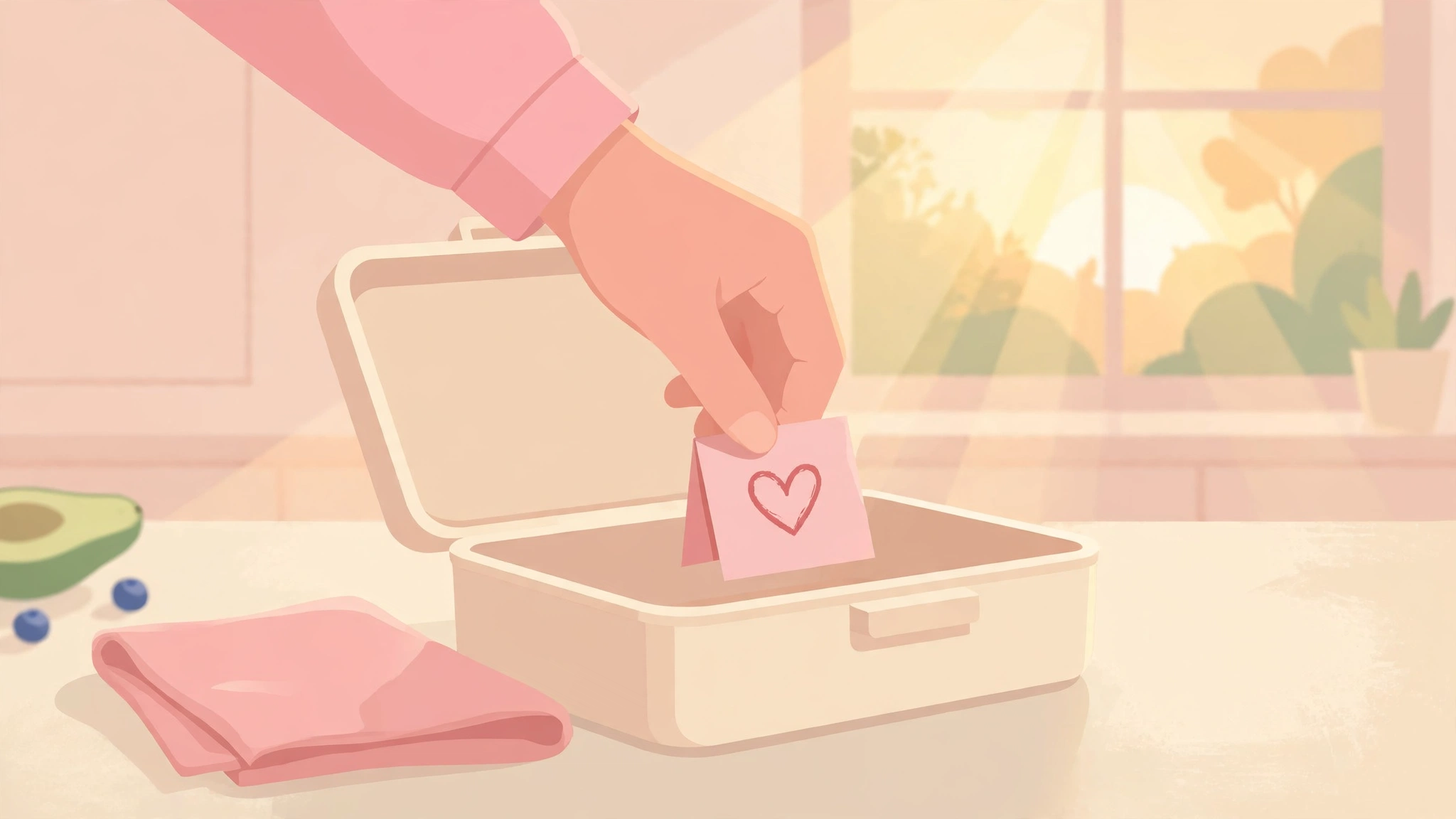
Surprise Micro-Gestures (16–20)
- Bring home a just-because treat. Not for a birthday — a pastry from their favorite bakery on a random Tuesday. Spontaneous gifts signal “you crossed my mind,” which is exactly what romance is.
- Book a tiny date they did not see coming. Dessert at the place they mentioned once. A twenty-minute sunset walk with their favorite podcast queued up. Surprise is most powerful at small scale.
- Defend your togetherness. Text from the couch: “Coming home? I’ll pause it.” Protecting your shared time against the evening’s drift is a quiet, daily act of choosing each other.
- Do one thing from their “someday” list. The ramen spot, the framed photo, the bookshop visit. Remembered dreams are rocket fuel for romance.
- Write a ridiculous compliment. Not just “you’re beautiful” — something specific and playful: “You fold a fitted sheet like a wizard and I married correctly.” Playful specificity beats generic praise.
Evening Rituals That End the Day Right (21–25)
- Cook their favorite meal, just because. Not for an occasion — “I felt like making the thing you love.” Food prepared with intention is one of humanity’s oldest love languages.
- Ask the real question. Skip “How was your day?” and ask “What was the best part of your day?” or “What is on your mind tonight?” One genuine question opens more intimacy than an hour of small talk.
- End screens thirty minutes earlier. Agree on a nightly “phones down” window. Cuddle, talk, read side by side — the content does not matter. The message is: you outrank the algorithm.
- Say the specific goodnight. “I’m glad it was you I came home to today.” A one-sentence, specific expression of gladness beats a hundred routine “love yous.”
- Hold them until they fall asleep. Six minutes of spooning, a hand in theirs, foreheads touching. Sleep-adjacent touch lowers cortisol for both of you and books a final deposit before morning.
Weekly Rituals That Keep It Going (26–30)
- Protect one sacred hour a week. Not a full date night — an hour. A walk, a bath together, cooking side by side. Calendar it like a meeting, because to your relationship it matters more than most meetings.
- Do the weekly check-in. Ten minutes, two questions: “What did I do this week that you appreciated?” and “What is one small thing I could do next week?” Couples who ask never have to guess how to be more romantic — their partner tells them.
- Revisit an old place. The café from your third date, the park bench from your first “I love you.” Nostalgia trips are free and remind you both how far your story has come.
- Learn one new thing together. A recipe, a dance move, ten phrases in another language. Novelty is a proven spark-reviver — couples who try new things together report measurably higher relationship satisfaction.
- Brag about them out loud. Tell a friend, in their hearing, something you admire about them. Being praised in public by the person whose opinion matters most is a top-tier romantic high.
The Transition-Moment Method: Romance for Busy and Exhausted Couples
Here is the method that makes how to be more romantic realistic even in the most hectic season: anchor gestures to the six transitions you already have every day — waking, parting, reuniting, dinner, winding down, sleep. Dr. John Gottman calls these “sliding-door moments”: tiny windows where you either turn toward your partner or away, and those micro-choices predict relationship happiness better than any grand gesture.
The beauty of transitions is that they need zero extra time. You are already saying goodbye — make it six seconds and make it count. You are already getting into bed — add the specific goodnight. Couples who feel “too busy for romance” are busy everywhere except the moments that matter most. Pick one transition this week — reunions — and make it sacred. Greet them like you missed them, because you did. That single shift, repeated daily, transforms the emotional temperature of a home.

What Relationship Science Says About Everyday Romance
The small-gestures approach is backed by decades of research. The Gottman Institute’s research found that stable couples maintain at least a 5:1 ratio of positive to negative interactions — and the positive ones are overwhelmingly small: a smile, a joke, a touch, a “tell me more.” A grand gesture counts as one deposit; a habit of micro-kindness counts as hundreds.
Neuroscience agrees. Physical affection — even a twenty-second hug — triggers oxytocin, deepening trust and safety. And studies on shared novelty, notably by psychologist Arthur Aron, show that couples who regularly try new activities together get measurable spikes in relationship satisfaction, because novel experiences activate the same reward circuits as early-stage infatuation. As Psychology Today notes, romance thrives not on special occasions but on the constant, everyday practice of love — nicknames, shared laughter, small kindnesses repeated until they become the texture of the relationship.
FAQs
Can you really learn how to be more romantic, or is it just natural?
You can absolutely learn it. Romance is not a personality trait — it is a set of learnable behaviors: noticing, remembering, anticipating, expressing. Research shows deliberate small acts of kindness predict relationship happiness far better than “natural chemistry.” Start with five gestures from this list, practice them for two weeks, and they will feel natural as they become habits.
How can I be more romantic without spending any money?
Most gestures in this guide cost nothing: a six-second kiss, a sticky note, looking up when they talk, cooking with extra care. Studies consistently show effort and specificity beat expense. A remembered detail (“you mentioned being nervous about Thursday”) lands harder than an expensive gift chosen in a hurry.
What if my partner and I have completely different ideas of romance?
That is normal — and exactly why the love-language conversation matters. Ask directly what makes them feel loved, and tell them what works for you. Different does not mean incompatible; it means you each learn a second language. Many couples alternate — one week in their language, one in yours — and grow closer through it.
Is it possible to be romantic in a long-distance relationship?
Yes — long-distance couples often become experts at verbal and surprise-based romance. Adapt the list: voice notes instead of goodbye kisses, surprise deliveries instead of just-because treats, synced movie nights instead of couch time. The principle is identical: small, frequent, specific deposits into the emotional bank account, just delivered through a screen.
How do I stay romantic when we are both exhausted and busy?
Use the transition-moment method: attach tiny gestures to moments that already exist — waking, parting, reuniting, bedtime. You need no extra time, just extra intention. Even in the hardest seasons, a six-second goodbye kiss and a specific goodnight keep the thread of connection alive until life gets easier.
Will doing small gestures every day make them lose their meaning?
Not if you keep them specific and varied. “I love you” on autopilot can fade into background noise, but “I loved how you handled that call today” never does. Rotate through the thirty gestures, personalize each one to the moment, and keep the love-language conversation going. Specificity keeps repetition from becoming routine.
Romance was never really about the grand gesture — it was always about the message underneath: you are on my mind, you matter to me, I choose you today. Now you know how to be more romantic in the way that actually works: small, specific, and daily. Pick five gestures from this list, start tonight, and watch what happens to the feeling in your home. And if you want to keep growing together, try our free tools — take the love calculator for a fun compatibility check, or chat with our AI relationship assistant for personalized advice on your love life.